



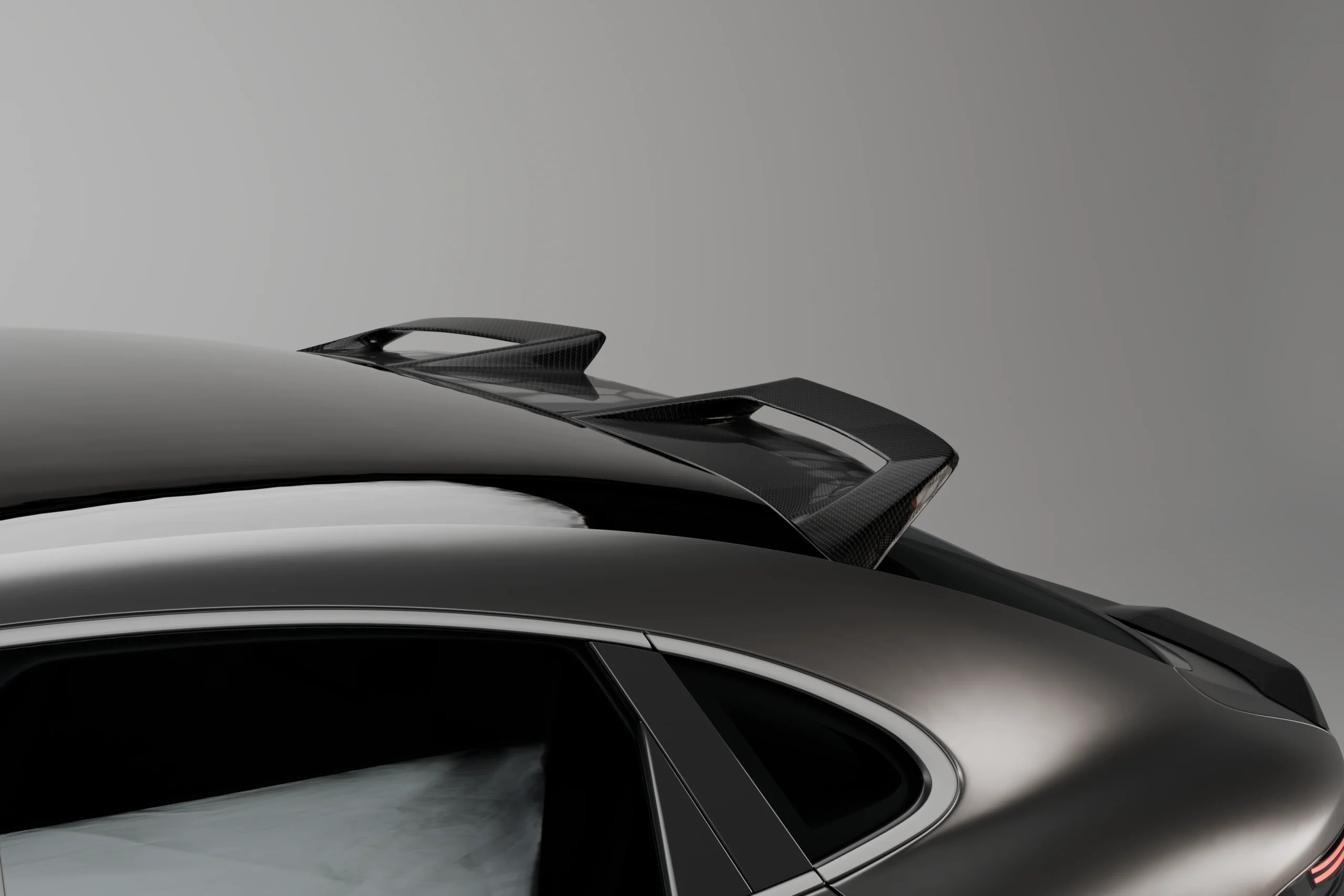
The carbon look is easy to copy. The carbon object is not. Here is how to tell them apart before your money leaves your account — the weave, the back of the part, the listing, and a five-check inspection to run on any seller. Including us.
Four things sold as "carbon fibre." One of them is.
The word "carbon" on a listing tells you almost nothing, because four very different objects wear it. At the top sits dry pre-preg carbon — resin impregnated into the weave at controlled ratios, cured in an autoclave under heat and pressure. Below it, wet-layup carbon: real fibre, hand-wetted with resin, ambient-cured — heavier, weaker, and prone to warping and clear-coat crazing within seasons.
Then it gets dishonest. Skinned fibreglass is a glass part with a single cosmetic layer of carbon on the visible face — carbon by photograph, fibreglass by function. And at the bottom, film and print: hydro-dipped or vinyl "carbon" texture over plastic, with no fibre in it at all.
Every technique in this guide exists to place a part on that ladder before you pay for it — because sellers of the bottom three depend entirely on you not knowing how to look.
Fakes are sold to the eye.
So train it.
The weave doesn't lie. Learn its four tells.
The front is for customers. The back is for the truth.
Every seller photographs the show face. Ask for the reverse. The back of a quality part is tidy — consistent surface, ordered layup, cleanly finished edges, mounting points that look engineered rather than improvised. The back of a cheap part is a confession: chopped-strand texture, resin puddles, ragged trimmed edges, pinholes.
Then use your hands. Genuine carbon construction is light and stiff — pick the part up and it should surprise you in both directions. Heavy means glass underneath; floppy means thin, under-built laminate. And study the finish in raking light: cloudy or yellowing coating, pinholes, and a wavy surface are process failures that only get worse in sunlight.
Most fakes can be caught before the part exists in front of you.
A fake can survive one check.
It cannot survive five.
Run the listing.
Open the listing you're considering — any brand, ours included — and answer five questions. The verdict updates as you go.
Answer the five checks above — the verdict builds as you go.
We published the test because we pass it.
Run us through the console above. Construction stated in writing — dry pre-preg, autoclave-cured. Platform-specific moulds, test-fitted before dispatch. Real photography of real parts. A warranty we carry on what we build. And a direct line to the team that made it, before any money moves.
That's not marketing; it's the checklist. And it's why teaching buyers to inspect harder is good business for exactly one kind of manufacturer.
Asked before every purchase.
How can I tell real carbon fibre from fake?
Read the weave: real cloth is aligned at the centre, distorts slightly at curves, wraps continuously over edges, and never repeats a flaw. Then check the reverse side (tidy layup vs chopped-strand mess), the weight and stiffness in hand, and whether the seller states construction in writing. Printed textures repeat; skinned fibreglass stops at the edges; vague listings hide something.
What's the difference between pre-preg and wet-layup carbon?
Pre-preg carbon has resin impregnated into the weave at controlled ratios, then cures in an autoclave under heat and pressure — lighter, stiffer, and dimensionally stable for years. Wet-layup is hand-wetted and ambient-cured: real fibre, but heavier, weaker and prone to warping and clear-coat crazing.
Is cheap carbon fibre ever worth buying?
Price is information. Pre-preg material, autoclave time, platform-specific tooling and hand-finishing set a genuine cost floor — a price far below it tells you which of those steps was skipped. For a part that lives in sunlight and airflow on a valuable car, the cheap version usually costs more by year two.
What should I ask a seller before buying a carbon part?
Five things: the construction method in writing; confirmation the mould is specific to your platform; real photos including the reverse side; the warranty they carry on their own part; and a technical conversation with a human. A genuine manufacturer answers all five easily.
Does "carbon look" or hydro-dipped trim damage anything?
Not mechanically — but it isn't carbon, shouldn't be priced as carbon, and on a serious build it reads as exactly what it is. The problem isn't the film; it's the listings that sell film at fibre prices.
This guide is general buyer education. Inspection reduces risk; it doesn't replace buying from manufacturers who state their construction and stand behind their parts.
Buy once. Verify first.
Bring us the five questions — construction, mould, photographs, warranty, and a straight technical conversation before anything is ordered.