



Carbon Aero · Buyer's Guide
A grille is the first thing anyone reads on the front of a car — and one of the most misunderstood upgrades you can make. Some buyers chase the look; others worry a carbon grille will choke their cooling; almost everyone underestimates how much fitment decides whether the finished result looks factory or aftermarket. This guide settles all three: style, cooling and fitment — so you know exactly what a carbon fibre grille does before you fit one.
A carbon fibre grille sharpens the car's face, manages the air feeding your radiators and brakes, and has to sit with OEM precision around cameras, sensors and mounting points. Get all three right and it looks like it left the factory that way. Get one wrong and everyone can tell. Here's how each works.
Style — the face of the car
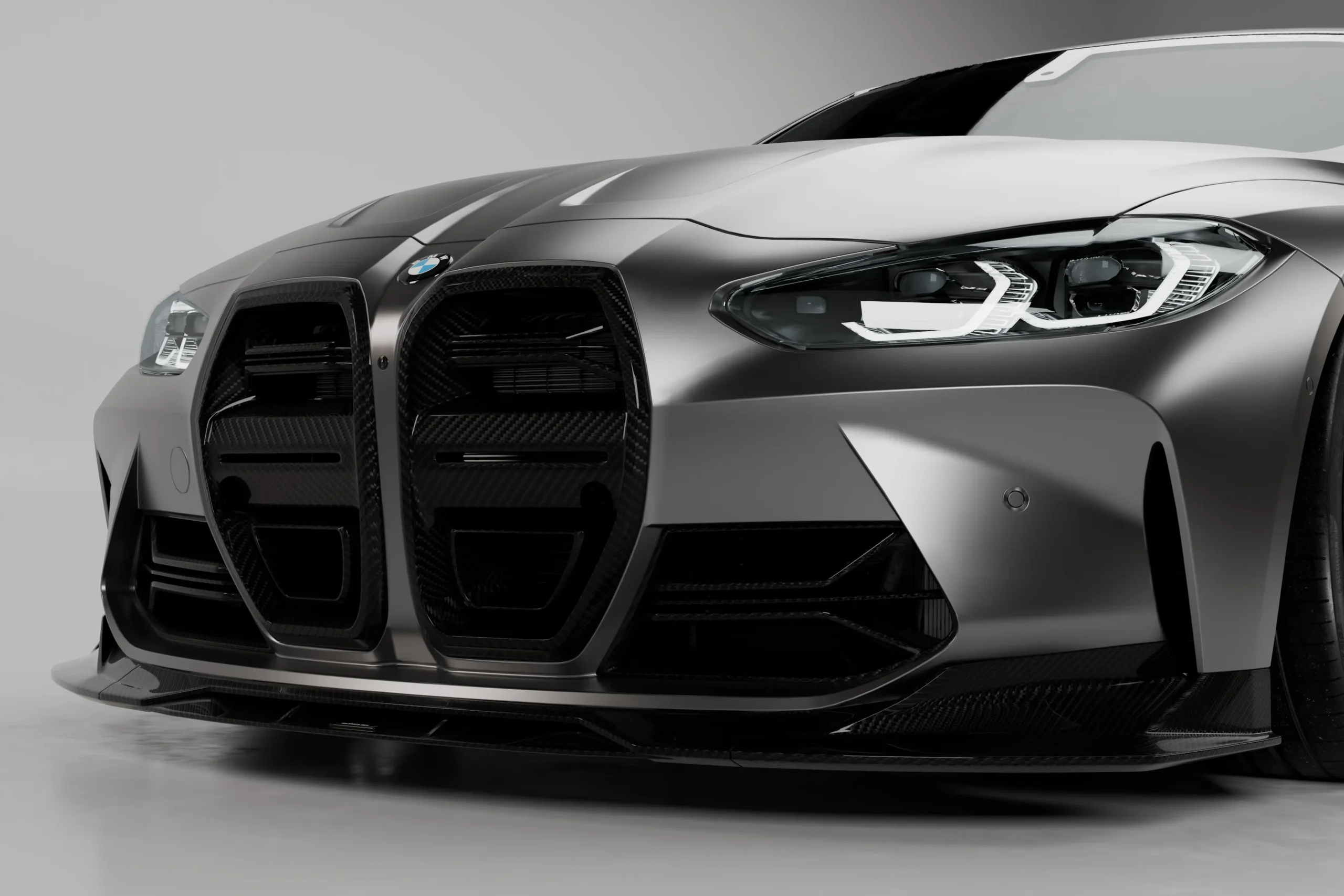
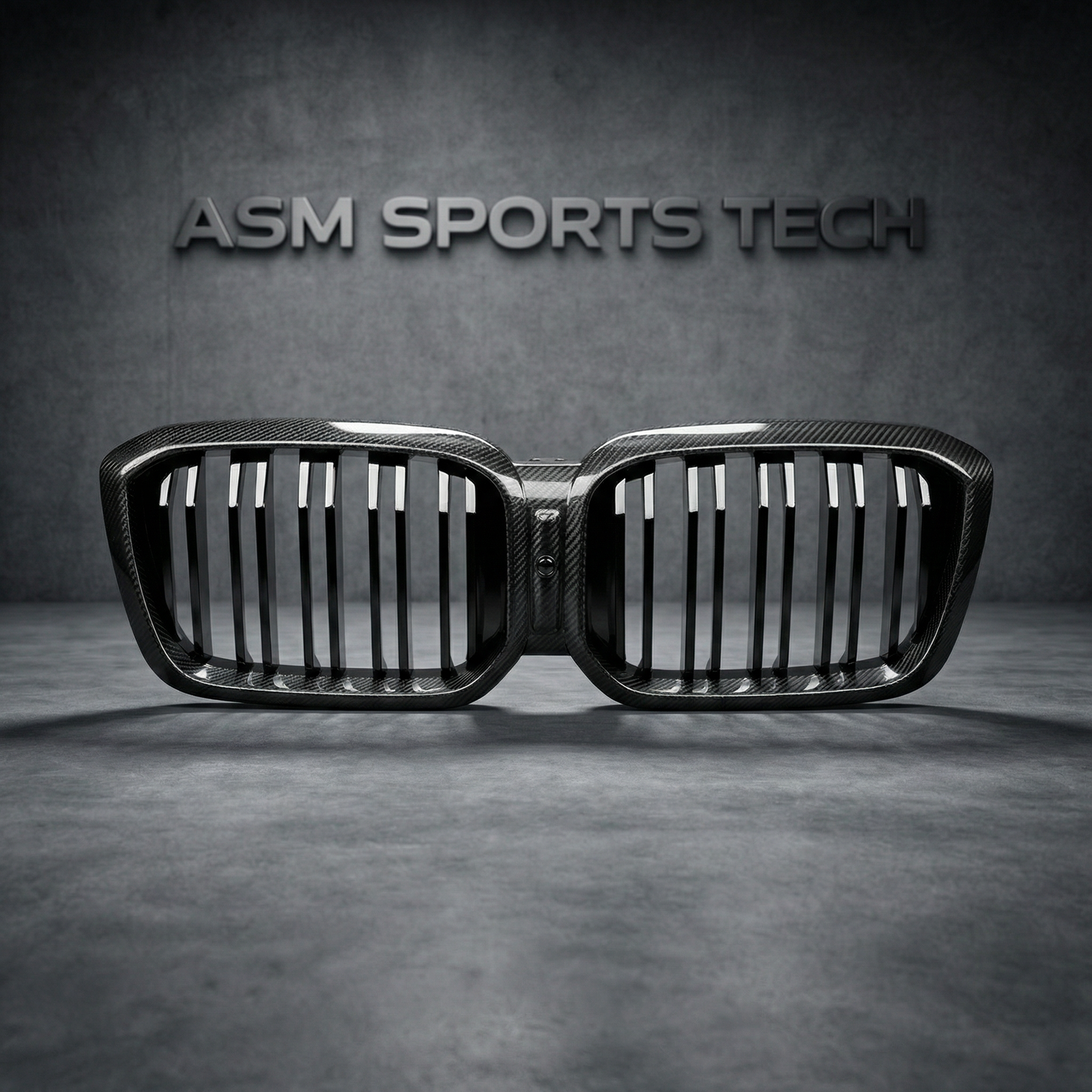
The grille frames the whole front end. Switching to carbon — a woven kidney surround, a GT-style insert or a full carbon frame — adds depth and intent that gloss black or chrome can't. Weave direction, twill pattern and lacquer all change how it catches light. The trick is cohesion: a carbon grille should echo the rest of the car's carbon theme, not sit alone.
Cooling — managing the air
Behind the grille sit your radiator, intercoolers and brake-cooling paths. A well-designed grille keeps — or improves — that airflow with correctly-sized openings and mesh, while a poorly-copied one can restrict it. Dedicated cooling ducts and intake grilles go further, feeding cold air where the car actually needs it. Style should never come at the cost of temperatures.
Fitment — the part nobody sees
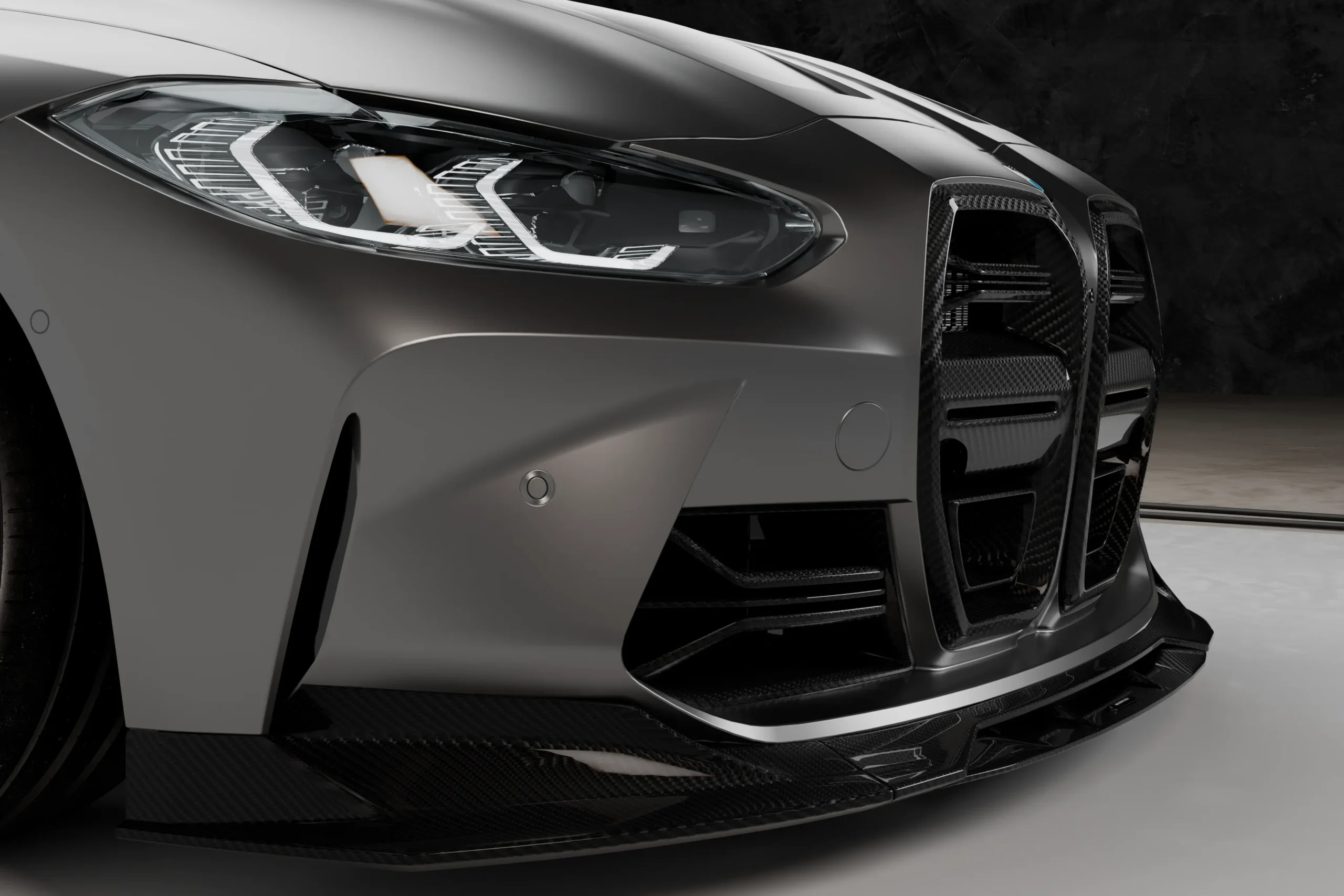
This is where cheap grilles fail. A proper carbon grille is engineered around the car's factory mounts, and around modern hardware: front cameras, parking sensors and ACC radar that often live behind the grille. Correct cut-outs, clip alignment and panel gaps are the difference between OEM-clean and obviously aftermarket. Every ASM grille is developed to factory fitment for its exact platform.
Tap through — every grille decision comes down to these three.
Style: how a carbon grille changes the face
The front grille sets the tone for the entire car. Moving to carbon fibre does three things at once: it adds visual depth through the weave, it ties the front end into a wider carbon theme, and — on cars like the BMW M3 and M4 — it lets you swap a divisive OEM look for a cleaner, motorsport-inspired one.
- Kidney & surround grilles — reframe the nose with a woven carbon border for instant presence.
- GT-style inserts — a track-derived slat pattern that sharpens the face, like our M4 GT-style carbon grille and M3 G80 GT-style grille.
- Finish — 2×2 twill, gloss vs matte lacquer and weave alignment decide how premium it reads in the light.
Because the grille lives right next to your badge, panel gaps and finish quality are scrutinised more here than almost anywhere on the car — which is exactly why material and fitment matter so much (more on that below). If you're weighing carbon against a painted finish, compare gloss black vs carbon fibre.
Cooling: does a carbon grille affect airflow?
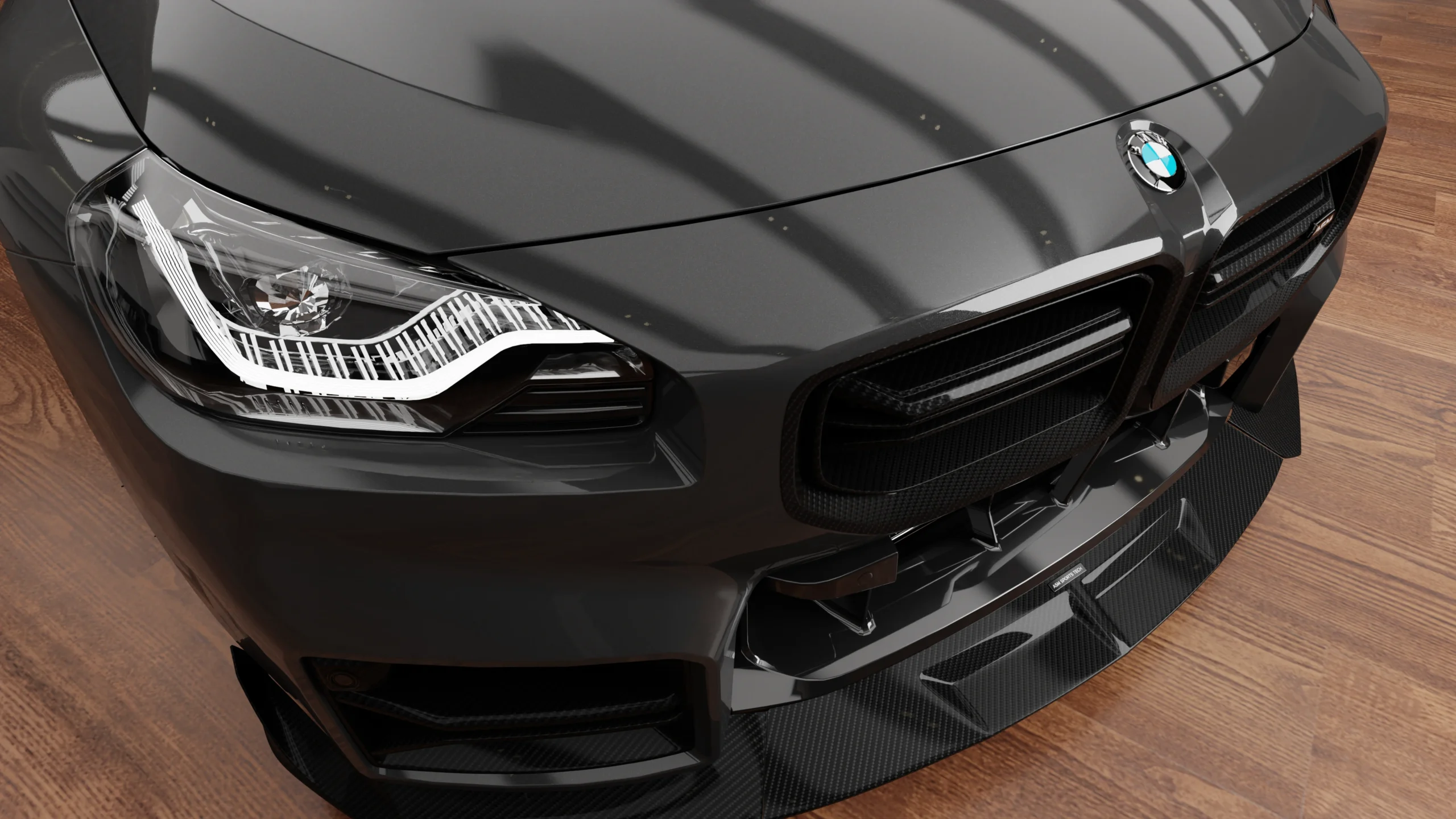
Short answer: it can — for better or worse. The grille is the doorway to everything that keeps your engine and brakes alive. A quality carbon grille is designed to preserve the factory open area (or improve it), so the radiator, intercoolers and oil coolers still breathe. A badly-copied grille with undersized openings or blocked mesh can trap heat — the last thing you want on a tuned car.
Two upgrades take airflow further:
- Intake grilles — like the M2 G87 carbon intake grilles, opening cleaner paths to the intake and coolers.
- Brake & cooling ducts — our M4 carbon ducts channel cold air straight to where heat builds under load.
This is why we develop grilles as part of a complete front-end direction within the ASM Aerodynamics Programme, rather than as a styling afterthought.
Fitment: the difference between OEM-clean and obvious
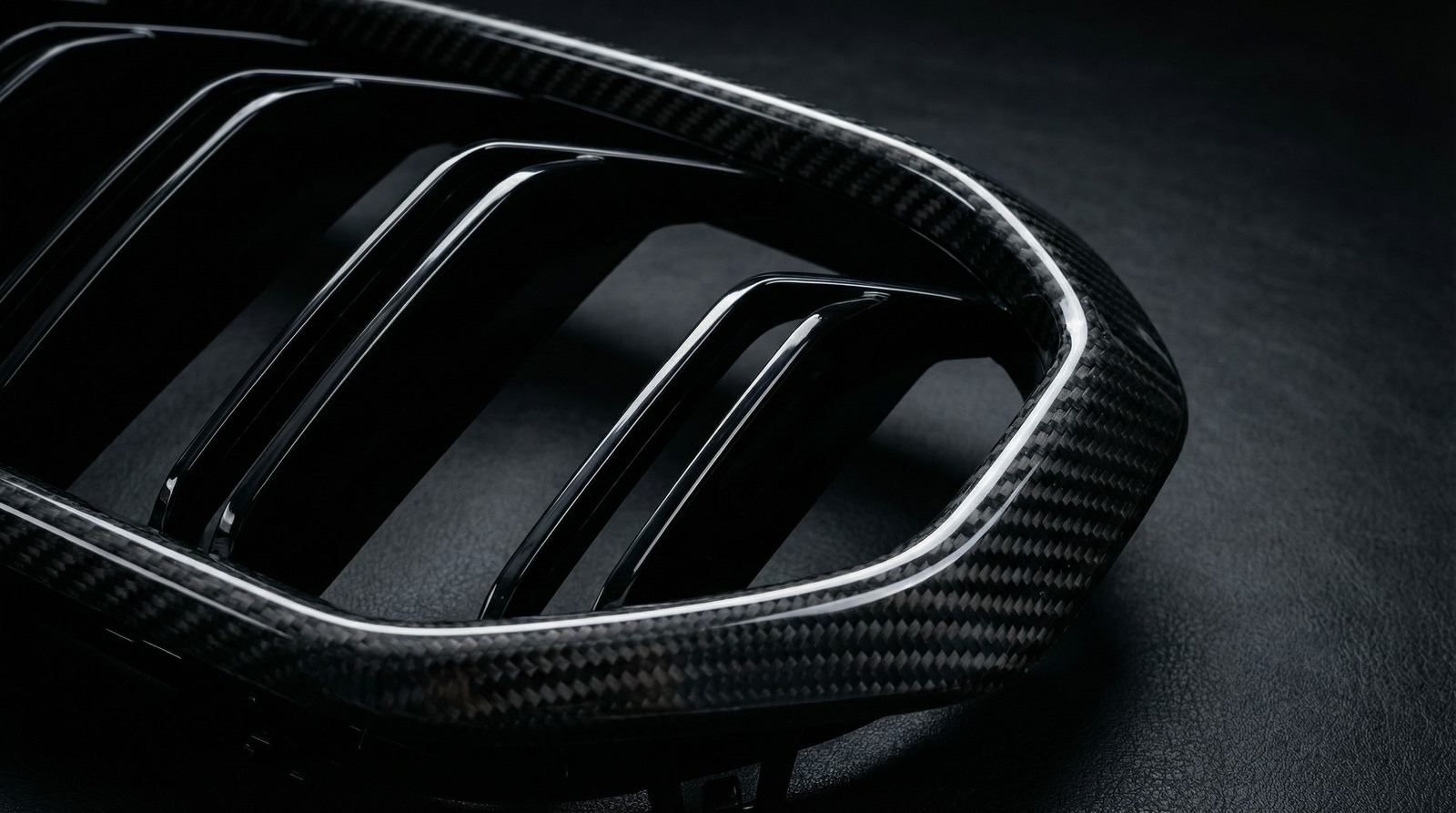
You can have the best weave in the world, but if the grille sits proud, leaves uneven gaps or fouls a sensor, everyone will know it's aftermarket. Fitment is where budget grilles quietly fail — and where a properly engineered part earns its price.
- Factory mounting — designed around the car's original clips and tabs, not forced on with adhesive.
- Sensor & camera cut-outs — correct openings for front cameras, parking sensors and ACC radar that live behind the grille.
- Panel gaps — even, tight lines against the bumper and bonnet shut-lines.
- Genuine material — real, consistent carbon that won't warp or fade; learn how to spot fake carbon fibre.
Every ASM grille is engineered to OEM fitment for its exact platform and backed by the Confidence Programme, so it goes on clean and stays right. Find yours on the platform selector — for example the G87 M2 dry carbon front grille.
Dry carbon, wet carbon or ABS — which grille?
Material sets both the look and the longevity of a grille. In short: dry pre-preg carbon is the premium, lightest, most consistent option; wet carbon offers the look for less; and gloss-black ABS gives the styling on a budget without the weave. The full breakdown is in our guide to dry vs wet carbon.
Dry pre-preg
Autoclave-cured, lightest and most uniform weave. The flagship finish for a show-facing part like a grille.
Wet carbon
Real carbon look at a lower cost. Great when you want the weave without the top-tier spend.
ABS gloss black
Clean, blacked-out styling with no weave — a smart entry if you're not chasing carbon specifically.
Whichever you choose, a quality UV-stable lacquer and simple regular care keep the weave looking factory-fresh for years.
Carbon fibre grilles — FAQs
Do carbon fibre grilles improve cooling? +
Are carbon grilles just for looks? +
Will a carbon grille fit around my car's camera and sensors? +
Is dry carbon worth it for a grille? +
How do I know a grille will actually fit my model? +
Precision · Presence · Performance
Reset the face of your car.
Find the carbon fibre grille engineered for your exact platform — OEM fitment, real dry carbon, guaranteed finish.