



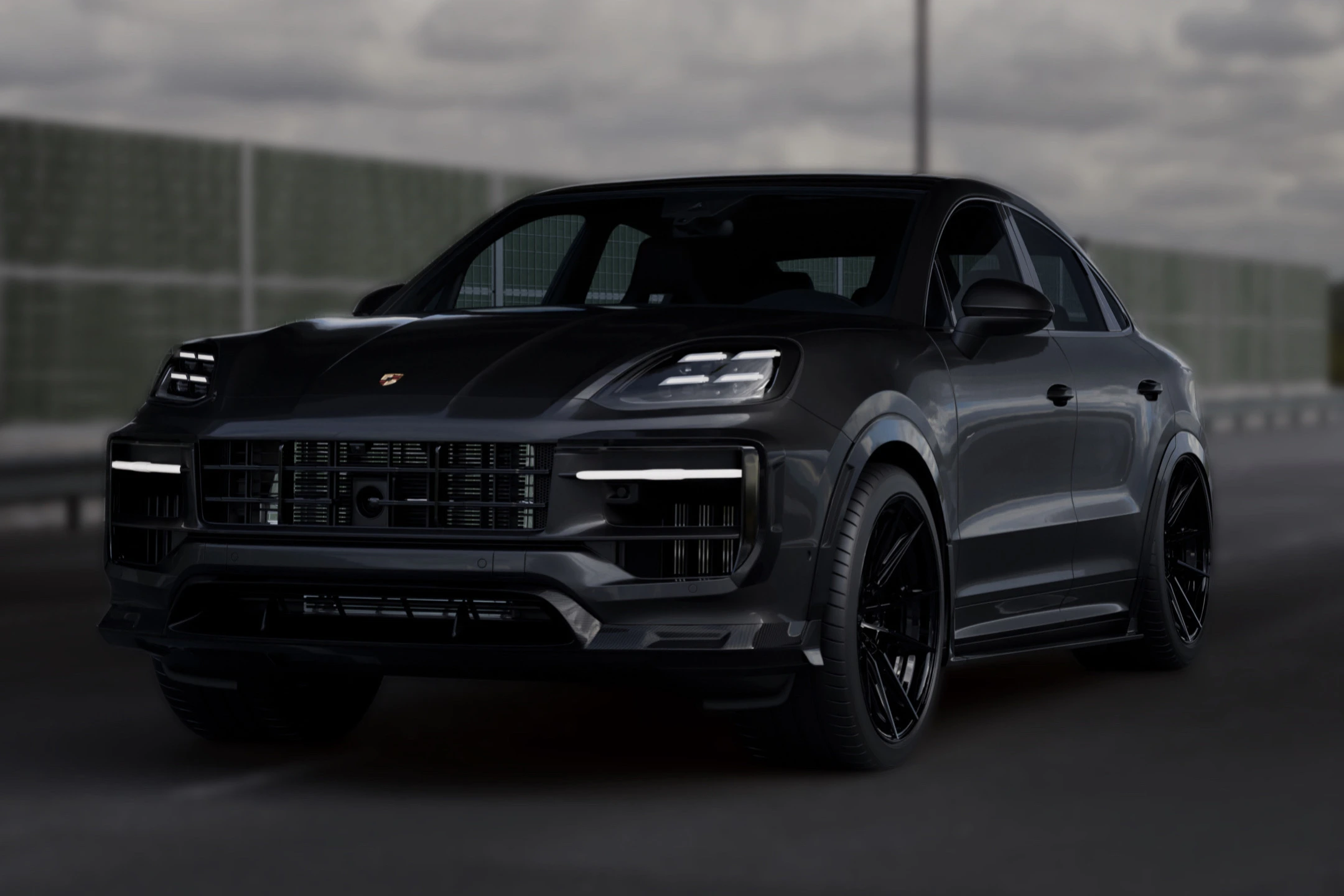
Porsche built the Turbo GT to be the extreme Cayenne — the record-setting point of the range, the one bought by people who don't do halfway. This is the definitive guide to finishing that decision: the aero architecture, the material truth, the wheel strategy, and how the build is commissioned properly.
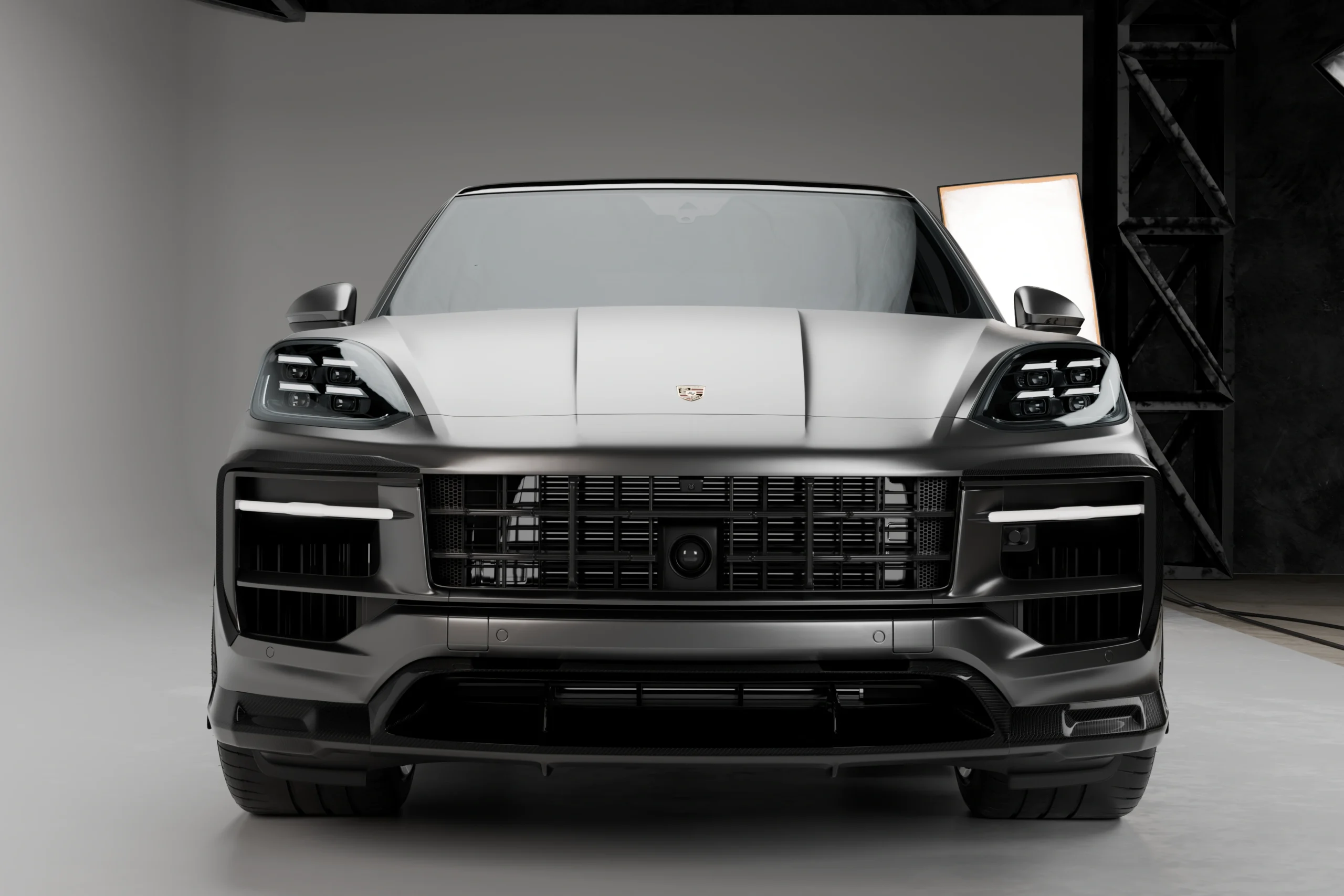
A car with nothing to prove is exactly the car worth finishing.
The Turbo GT occupies a strange and privileged position. It is already the answer — the coupé-only, record-setting flagship of the Cayenne range, engineered past the point where anyone could call it unfinished. So the question this guide answers is not how to improve it. It's subtler: how to make the exterior say, at a glance, what the specification sheet already knows.
Because from the kerb, a standard Turbo GT and a well-optioned Cayenne read closer than their engineering deserves. The people who commission a full programme aren't correcting the car. They're completing the sentence Porsche started — carbon where the eye reads intent, wheels that carry the mass like it isn't there.
The specification sheet already knows.
Now the exterior should.
Eight components. One uninterrupted line.
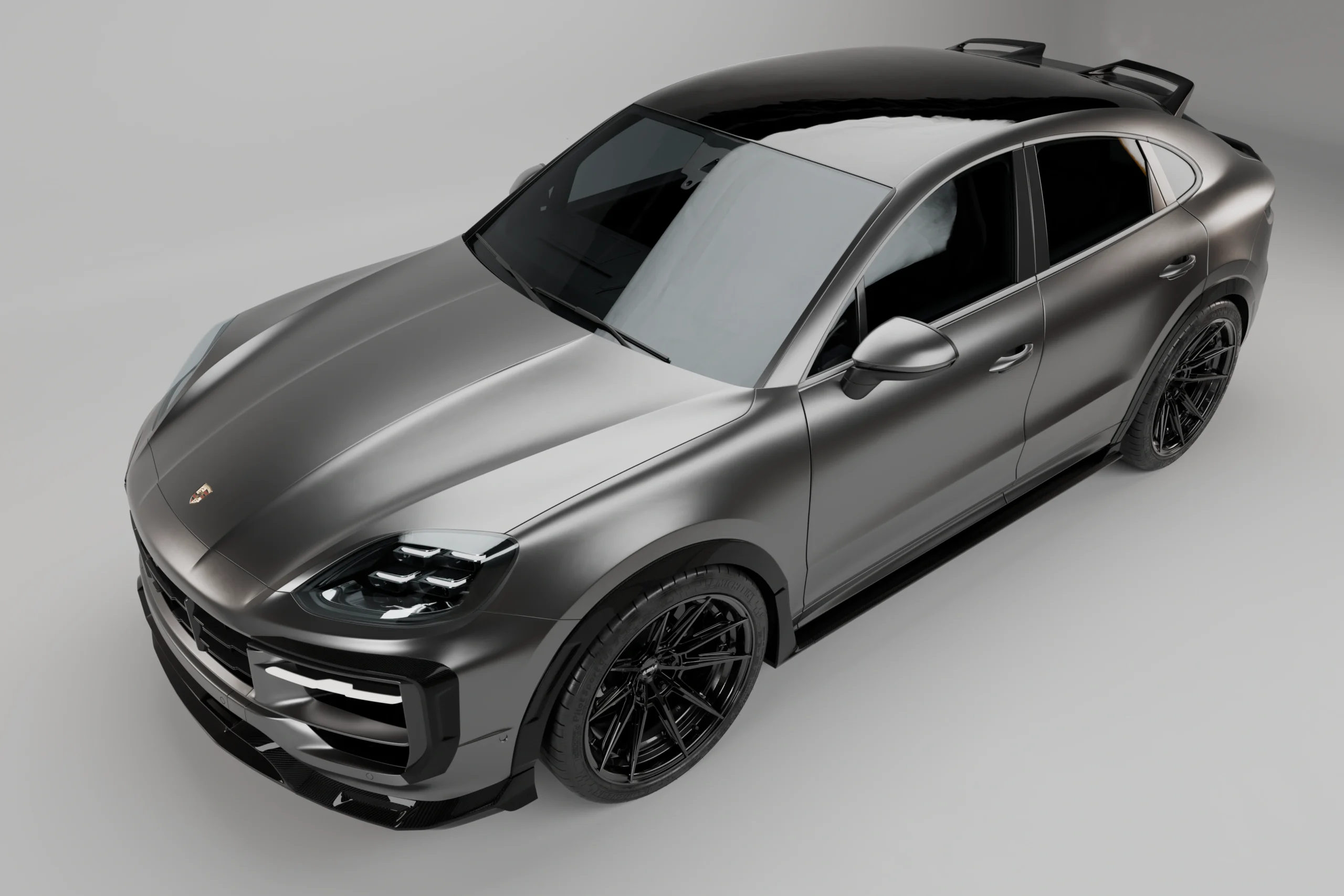
The Turbo GT's body is broad, tall in the flank, and deliberately restrained at the edges — which is precisely where a carbon architecture works. The programme runs front lip to roofline as one drawn line, each component owning a zone, no zone left guessing.
Dry pre-preg, or the look without the object.
Two panels can photograph identically and be different objects entirely. Dry pre-preg carbon — resin impregnated into the weave at controlled ratios, cured under heat and pressure in an autoclave — is the process behind Formula 1 and hypercar bodywork. It produces a part that is lighter, stiffer and visibly deeper than wet-layup imitation, with a tight, symmetrical weave that holds for the life of the car.
On a vehicle that lives in sunlight and gets driven the way a Turbo GT is meant to be, the difference isn't taste. Wet-layup panels warp in heat, craze at the clear-coat and stress their mounting points — the slow failure that turns a build into an apology. Pre-preg simply doesn't have that future.
A fast SUV carries real mass. The wheels decide whether you feel it.
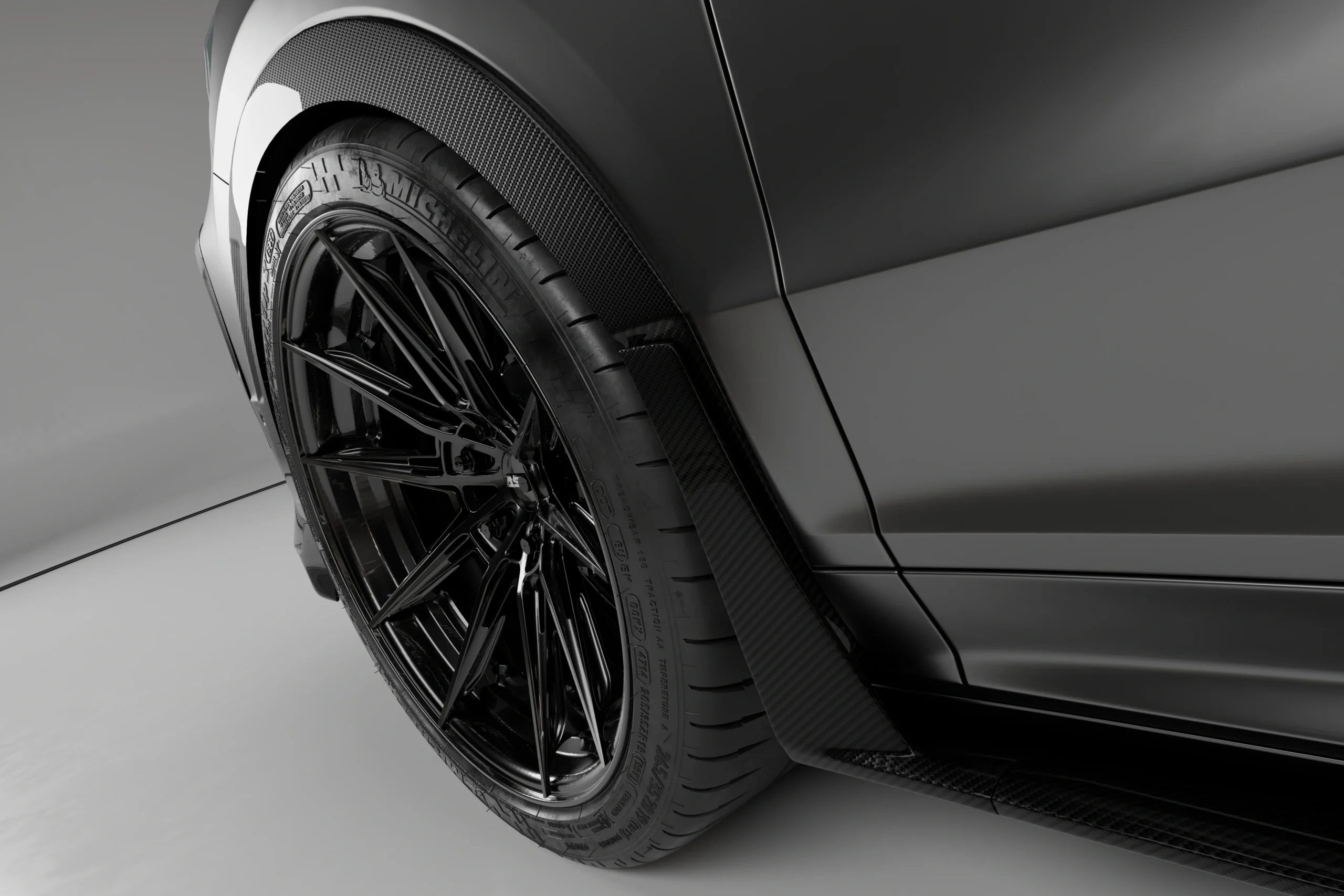
The Turbo GT is the case where wheel construction stops being a preference and becomes the specification. A heavy, fast platform multiplies everything a wheel does: unsprung mass punishes the dampers harder, impacts arrive with more energy, and load ratings are not a formality but the entry requirement.
Large diameters suit the car — its arches were drawn for them. The discipline is in the pairing: keep the overall rolling diameter at factory so the driveline's systems read the road correctly, protect enough sidewall for real streets, and take the mass out through construction rather than size. A forged wheel — machined from a single billet, strength from grain rather than bulk — is how a car this heavy gets lighter on its feet while looking more serious, not less.
Specification is platform mathematics: diameter, width, offset and load rating calculated against the Turbo GT's corner weights, brakes and arch clearances — with the tyre chosen as part of the same decision, never after it.
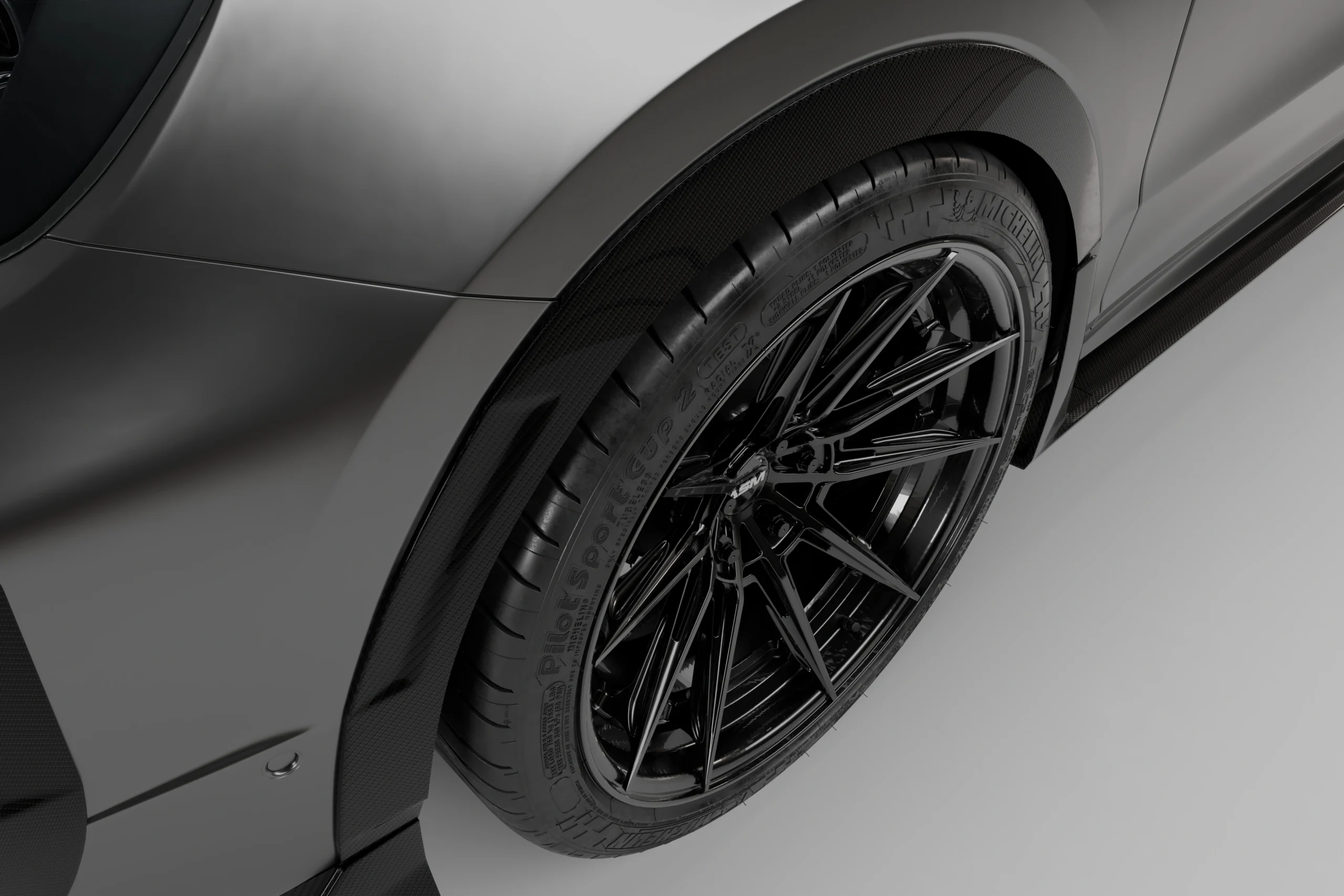
Strength from grain, not bulk.
Presence without the penalty.
Compose the specification.
Every programme we build starts as this conversation. Choose the scope — the console assembles the specification the way a consultation would.
Ownership, handled like the build.
A programme at this level is commissioned with the paperwork in mind from day one. Three notes that belong in every owner's file:
Asked before every commission.
What's the right first step — aero or wheels?
If the programme happens in stages: the front splitter first (the largest visual change and the anchor for everything after), the rear diffuser second for balance, wheels alongside or immediately after. Commissioned together, aero and wheels are specified as one direction — which is why most Turbo GT programmes are built in a single run.
Will large wheels ruin the Turbo GT's ride?
Not if the specification is disciplined: overall rolling diameter held at factory, a workable sidewall protected, and the mass taken out through forged construction rather than added through size. On a heavy, fast platform, the wheel's weight matters more than its diameter.
Is the carbon genuinely pre-preg?
Yes — dry pre-preg carbon, autoclave-cured, moulded specifically to the Cayenne Turbo GT Coupé, hand-finished and test-fitted before dispatch. Construction is stated in writing with the part, because it should be everywhere you buy.
Does the kit fit over factory parts, or is anything permanent?
The programme is bolt-on to factory mounting points — no cutting, no permanent change. The car returns to stock at any time, which protects warranty position, lease returns and resale.
How is a programme commissioned?
Through consultation — platform confirmation, scope, wheel specification calculated to the car, then production. Components are made to order; timelines and sequence are agreed before anything is built.
This guide is general information for Cayenne Turbo GT owners, not legal or financial advice. Confirm your exact model year and specification in consultation before ordering.
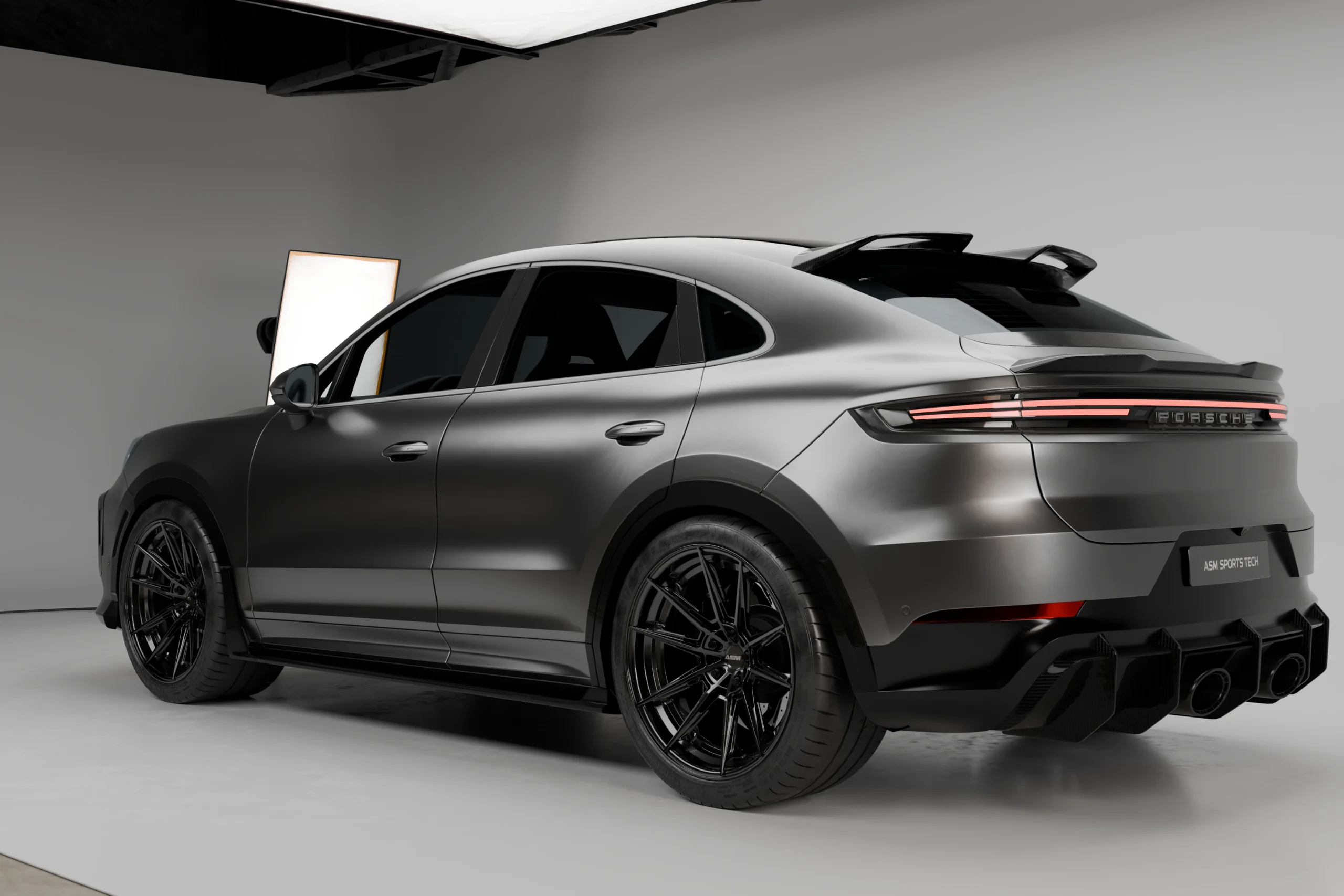
Porsche finished the engineering.
Finish the car.
One conversation covers everything — scope, wheel mathematics, lead times, and how the programme is built around your exact car.