

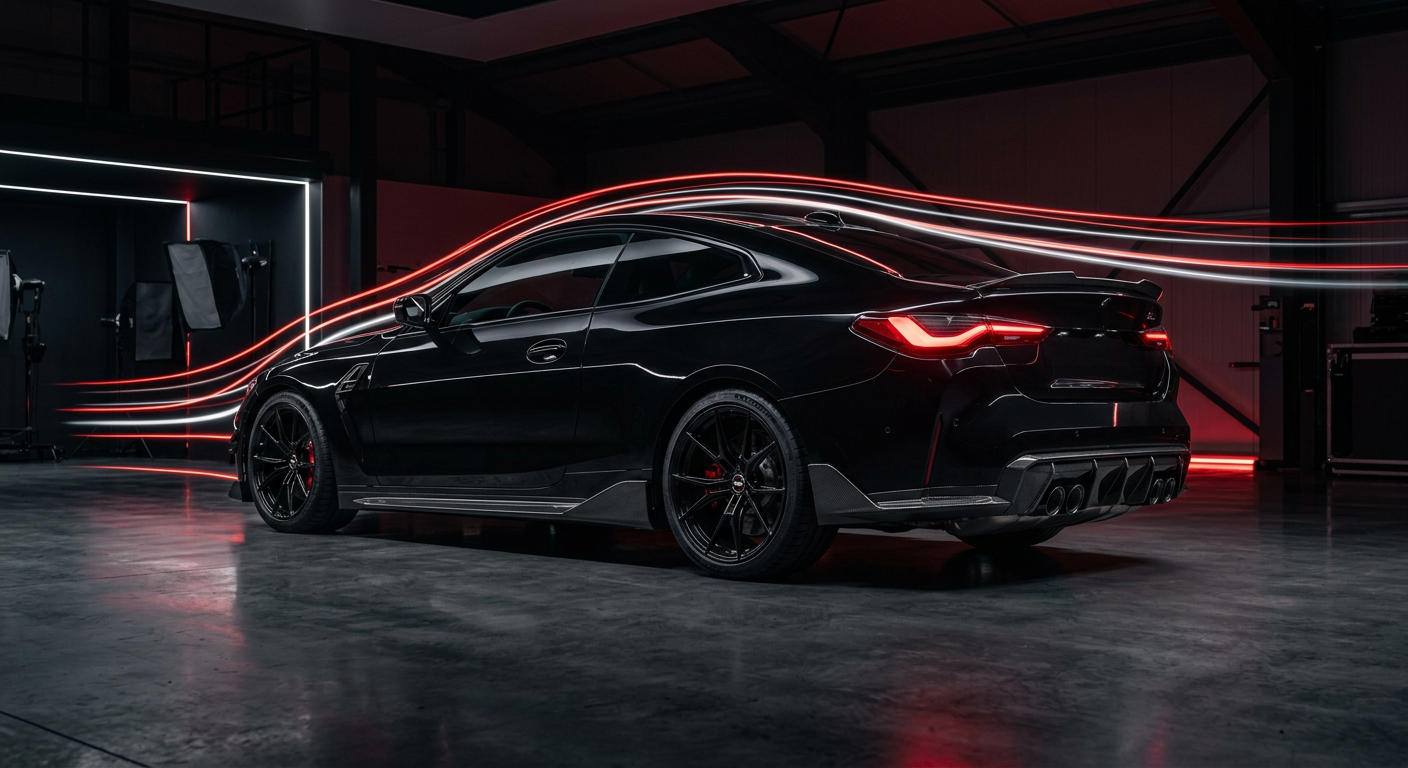
9 Ways to Improve Car Aerodynamics
Aerodynamics is one of the most misunderstood areas of vehicle performance. Many upgrades are chosen for appearance alone, but real aerodynamic improvement is about airflow management, pressure balance, stability at speed, and the way every part works together as one resolved system. If the build is genuinely performance-led, aero should never be random.
Why Better Airflow Changes More Than Just Speed
A car moving through air is dealing with pressure, turbulence, lift, drag, and airflow separation all at the same time. That means aerodynamic upgrades influence more than top speed alone. They affect stability, steering confidence, braking composure, high-speed balance, and even how cleanly the car uses its available power.
Poor aerodynamics often show up as instability at speed, vague front-end feel, unsettled rear behaviour, or a build that looks aggressive but feels unresolved. Better aerodynamics do the opposite. They calm the car down. They make it feel more planted, more predictable, and more complete.
The most important rule is simple: the best aerodynamic part is not always the biggest or most dramatic. It is the one that suits the platform, the speed range, and the purpose of the build. This guide breaks down nine of the most effective ways to improve car aerodynamics, explains what each one actually does, and shows how to choose upgrades that work together rather than fight each other.
Good aero is about controlling where air goes, how it separates, and what pressure it creates around the body.
Many aero upgrades are really stability upgrades, especially as vehicle speed increases.
Front and rear airflow need to support each other for the strongest overall result.
The strongest builds use aero as a complete system, not as isolated parts added for effect.
Test Which Aero Direction Fits Your Build
Choose the build style, speed bias, and aero ambition. The live tool updates to show which aerodynamic direction makes the most sense and what kind of performance change to expect.
Start with front aero and basic flow control
For this type of build, the strongest first upgrades are usually front splitter direction, side skirt control, and cleaner airflow management before moving into more aggressive rear aero.
Aero direction preview
The visual below changes between basic airflow, front-aero bias, and full aero system direction.
9 Ways To Improve Car Aerodynamics Properly
These are not random visual mods. Each one changes airflow behaviour in a different way, and each one works best when matched to the right build direction.
Add a Front Splitter
A front splitter is one of the most effective first steps in aerodynamic improvement. It reduces the amount of air moving under the front of the car and helps control pressure at the nose.
- Improves front-end stability
- Helps reduce front lift
- Strong first step for aero builds
Use Side Skirts
Side skirts help manage the air moving along the sides of the car and reduce the amount of disturbance entering underbody zones.
- Supports cleaner underbody flow
- Works well with splitter direction
- Improves aero system continuity
Fit a Rear Diffuser
A diffuser helps accelerate and manage the air exiting from underneath the car. This can reduce turbulence and improve rear stability when the rest of the underbody flow supports it.
- Supports cleaner rear airflow exit
- Reduces rear turbulence
- Best when part of a wider aero package
Choose the Right Rear Spoiler
A spoiler helps reduce lift and manage airflow separation at the rear. For many road cars, it is the more efficient and more resolved option than a large exposed wing.
- Great for fast-road stability
- Usually lower drag than a wing
- Cleaner premium visual direction
Add a Wing Only If the Build Needs It
A wing creates more serious aerodynamic load, but it also introduces more drag and asks more from the overall setup. It works best on harder-driven or track-focused builds.
- Creates genuine downforce
- Best for high-speed aero demand
- Needs better front-to-rear balance
Lower the Ride Height Properly
Reducing ride height can improve airflow under the car and reduce the amount of turbulent air entering underbody zones. But it needs to be done with fitment logic, not randomly.
- Improves underbody airflow quality
- Can reduce lift and turbulence
- Works best with correct suspension setup
Improve Brake Duct and Vent Logic
Air ducts, bumper vents, and extraction paths can improve cooling efficiency and reduce chaotic trapped air around critical zones.
- Supports cooling and flow control
- Useful on performance-focused builds
- Can improve pressure management
Clean Up Wheel and Arch Turbulence
Wheel arches are major turbulence zones. Wheel design, tyre setup, arch venting, and body detailing all affect how much disorder the car creates at speed.
- Helps reduce local turbulence
- Improves airflow cleanliness
- Often overlooked in aero planning
Think in Complete Aero Systems
The strongest aerodynamic result comes from combining parts that support each other. Splitter, skirts, diffuser, spoiler, and ride height all matter more when they work together.
- Most important rule in aero building
- Prevents mismatched performance behaviour
- Creates a more resolved finished car
Which Aero Upgrades Matter Most First?
This depends on the platform, but in many cases the smartest first aerodynamic gains come from front-end airflow management. A splitter, better front intake logic, side skirt continuity, and clean ride height direction tend to create meaningful improvement before the build moves into more aggressive rear aero decisions. That is because a lot of road cars struggle first with front lift, messy underbody air, and unstable flow separation rather than an absolute lack of rear wing load.
For fast-road performance builds, a clean spoiler and diffuser direction often do more than a large exposed wing. The reason is simple: efficiency matters. A part that adds stability with less drag penalty is often stronger in the real world than a part that looks more extreme but demands more speed and more complete aerodynamic support before it starts making sense.
Track-oriented builds are different. Once the car is running in higher-speed conditions more regularly, the demand for real aerodynamic load rises. This is when a full rear wing, stronger diffuser logic, and more aggressive front aero can become much more useful. But even then, the result still depends on system balance. Rear load without enough front support can make a car feel confused. Front aero without rear support can make it feel nervous.
That is why the best aerodynamic improvements usually come from order and structure, not random modification. Improve the airflow path. Reduce lift. Control turbulence. Support underbody flow. Then match the rear of the car to the front. The strongest aero builds always feel intentional.
Real aerodynamics is not about how dramatic the part looks. It is about how intelligently the car moves through air.
Choose The Build Type And See What To Improve First
Start with subtle flow control
For a daily performance car, the strongest priorities are usually subtle but meaningful improvements: a clean splitter, sensible ride height, OEM+ spoiler direction, and parts that improve flow without making the car drag-heavy or visually overdone.
- Splitter and spoiler direction first
- Keep drag cost controlled
- Choose premium integration over drama
Build front-to-rear aerodynamic balance
Fast road builds benefit most from balance. This is where splitter, side skirts, diffuser logic, and a stronger rear aero decision can start to work together properly.
- Front splitter + skirts + diffuser
- Use spoiler or wing based on speed range
- Focus on real composure, not visual noise
Go full system, not isolated parts
A track car needs a proper aerodynamic system. This is where larger front aero, stronger diffuser direction, reduced underbody disturbance, and a real rear wing become much more relevant.
- Full aero balance is essential
- Rear wing only makes sense with front support
- Efficiency and pressure balance matter most
What Is The Best Way To Improve Car Aerodynamics?
The best way is not to add the most parts. It is to improve the airflow path in the right order. Start with the areas that create the biggest instability for the way the car is actually used. For many builds, that means front splitter direction, cleaner underbody flow, sensible ride height, and a rear aero decision that matches the speed range and overall purpose of the car.
A properly aerodynamic car should feel calmer, more planted, and more resolved as speed rises. It should not feel like a collection of parts. It should feel like one engineered direction.
Ownership Questions, Answered
These are the most common questions people ask when trying to improve car aerodynamics properly.
For many performance road cars, a front splitter is one of the strongest first aerodynamic upgrades because it helps reduce front lift and improves high-speed stability without demanding an extreme full-aero setup.
Yes, when used properly. Side skirts help control the air moving along the side of the car and reduce disturbance entering underbody zones, especially when combined with splitter direction.
No. A wing usually creates more rear load, but it also usually creates more drag and demands more aero balance. For many road cars, a spoiler is the more efficient and more suitable option.
It can, because it reduces the amount of air moving under the chassis and can improve underbody airflow quality. But it needs to be done properly, with suspension, fitment, and ride-use logic in mind.
They can help, but they work best when the underbody airflow feeding them is already reasonably controlled. A diffuser is strongest as part of a wider aerodynamic system rather than a standalone visual part.
The biggest mistake is choosing parts based only on appearance and not on airflow logic. The second biggest mistake is ignoring front-to-rear balance and treating aero like separate decorative upgrades.
Explore Premium Carbon Fibre Aero Systems
Discover splitters, side skirts, diffusers, spoilers, wings, and complete platform-specific aerodynamic programmes developed around real fitment, stronger flow control, and performance-led design.