



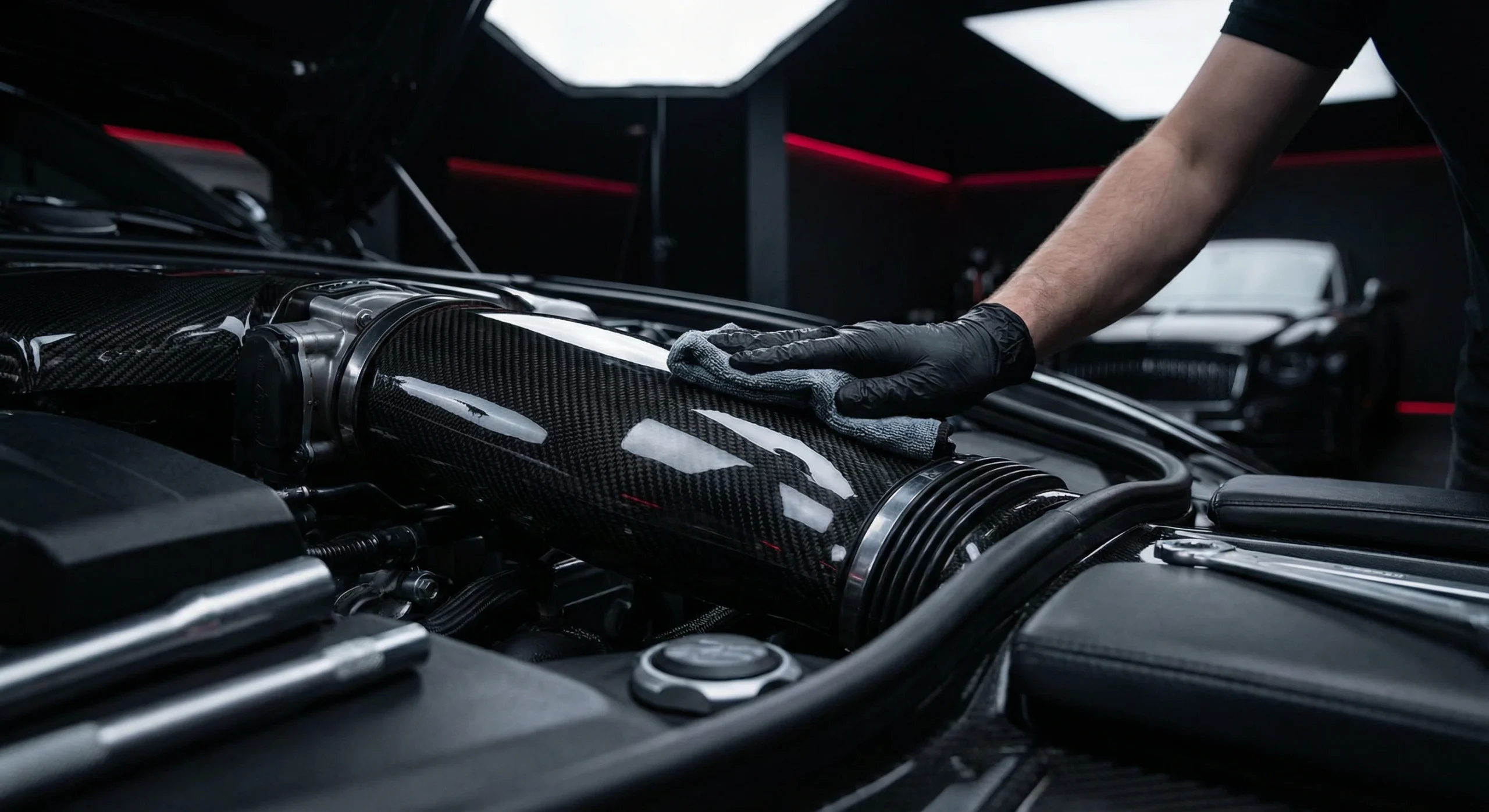
How to Protect Carbon Fiber Parts: The Complete Maintenance Guide
Carbon fibre is more than a styling material. It is a performance-led composite that deserves proper maintenance, disciplined cleaning, and long-term surface protection. This guide explains how to preserve finish quality, structural clarity, and premium visual condition over time.


Finish Protection
Preserve UV resistance, gloss clarity, and long-term surface consistency.

Material Discipline
Use the correct cleaning process for genuine composite surfaces and coated finishes.

Premium Ownership
Protect the presentation, value, and overall direction of the complete vehicle build.
Why Carbon Fibre Requires Proper Maintenance
Carbon fibre components sit in a demanding environment. They are exposed to sunlight, road film, heat cycling, hard water deposits, incorrect wash chemicals, and contamination from everyday use. If the surface is neglected, the finish can gradually lose the visual depth and clarity that make carbon fibre feel premium in the first place.
On a properly developed vehicle, carbon fibre is never just cosmetic. It contributes to the overall product direction, visual cohesion, and sometimes even aerodynamic function of the build. That is why maintenance should not be treated as an afterthought. Protecting carbon fibre is really about protecting the standard of the ownership experience.
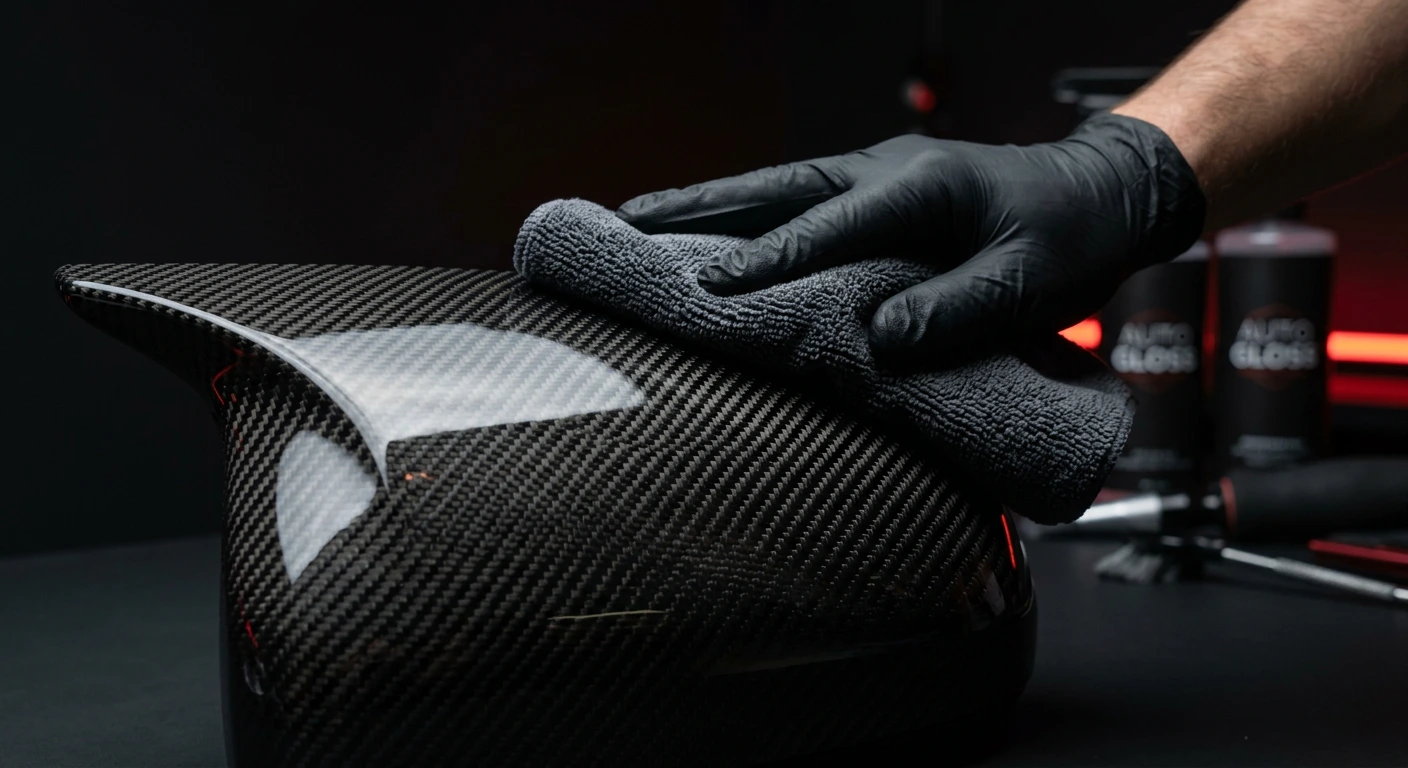
Surface clarity is part of the product.
A premium composite part should look sharp, deep, and resolved. Once the outer finish begins to haze, swirl, or lose consistency, the whole part feels less precise. Maintenance protects that material language.
How to Clean Carbon Fibre Parts Properly
The correct cleaning method is simple, but it needs discipline. Start with a pH-balanced shampoo, soft wash media, and clean water. Avoid harsh degreasers unless absolutely necessary, especially on coated carbon fibre surfaces that rely on the integrity of the clear finish.
Always rinse away loose dirt before touching the part. Dragging contamination across the surface is one of the fastest ways to introduce fine swirls. Drying should also be controlled. Use a clean microfibre towel or filtered air rather than letting water sit and mark the finish.
Pre-rinse first
Remove loose road contamination before any contact wash begins.
Use pH-balanced shampoo
Keep the process gentle and surface-safe, especially on gloss clear-coated parts.
Dry with control
Do not leave water to evaporate on the surface. Dry carefully to avoid marks.
Explore Premium Carbon Fibre Upgrades
Discover platform-led carbon fibre aero components developed to deliver stronger visual presence, cleaner fitment direction, and more resolved ownership.
How to Protect Carbon Fibre from UV Damage
UV exposure is one of the main reasons carbon fibre finishes begin to deteriorate over time. Even high-quality coated parts benefit from routine protection, especially if the vehicle is driven frequently, parked outdoors, or exposed to stronger summer conditions.
A dedicated surface sealant, ceramic layer, or specialist protective product can help maintain finish depth and reduce environmental wear. The goal is not to create artificial shine. The goal is to preserve the surface quality that is already there.
Protecting carbon fibre is about extending finish integrity, not chasing a temporary gloss effect.
Common Mistakes That Damage Carbon Fibre
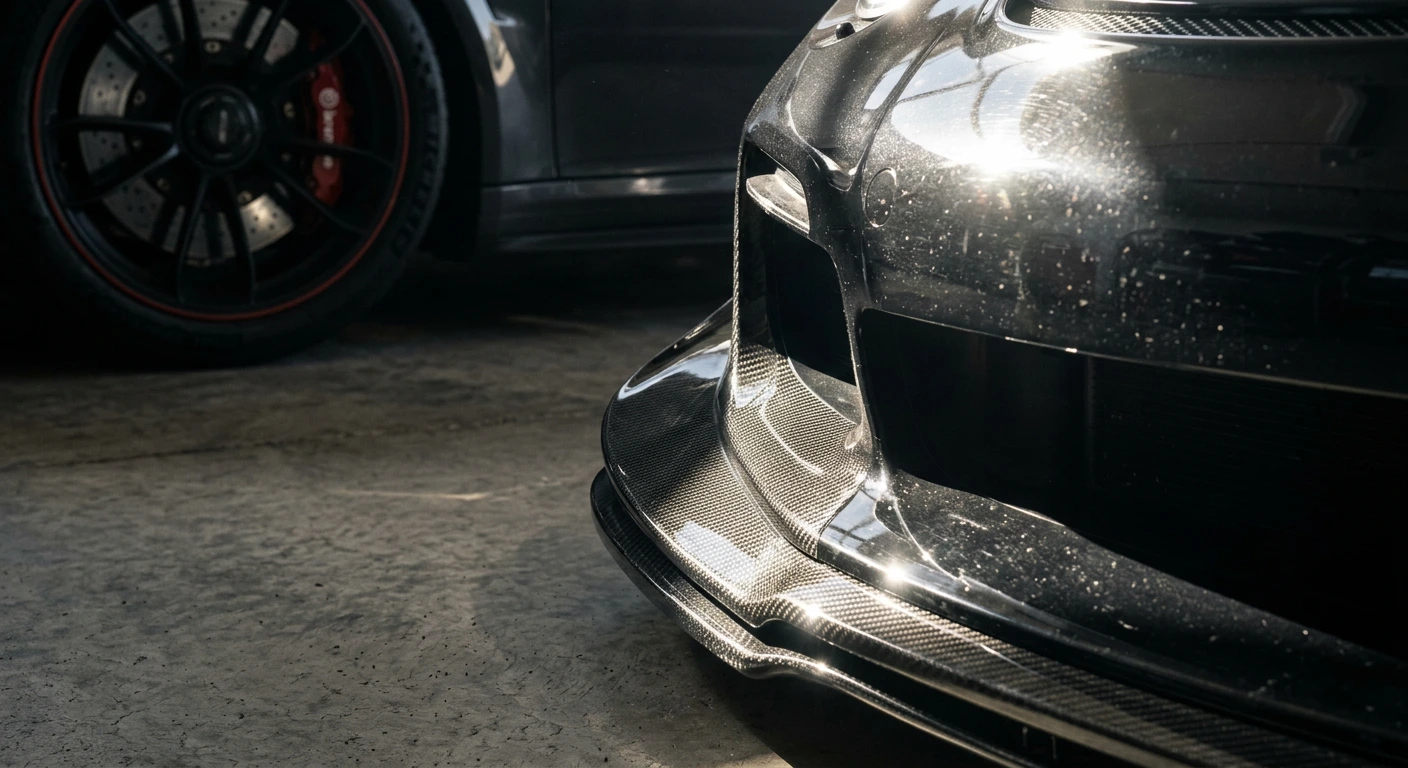
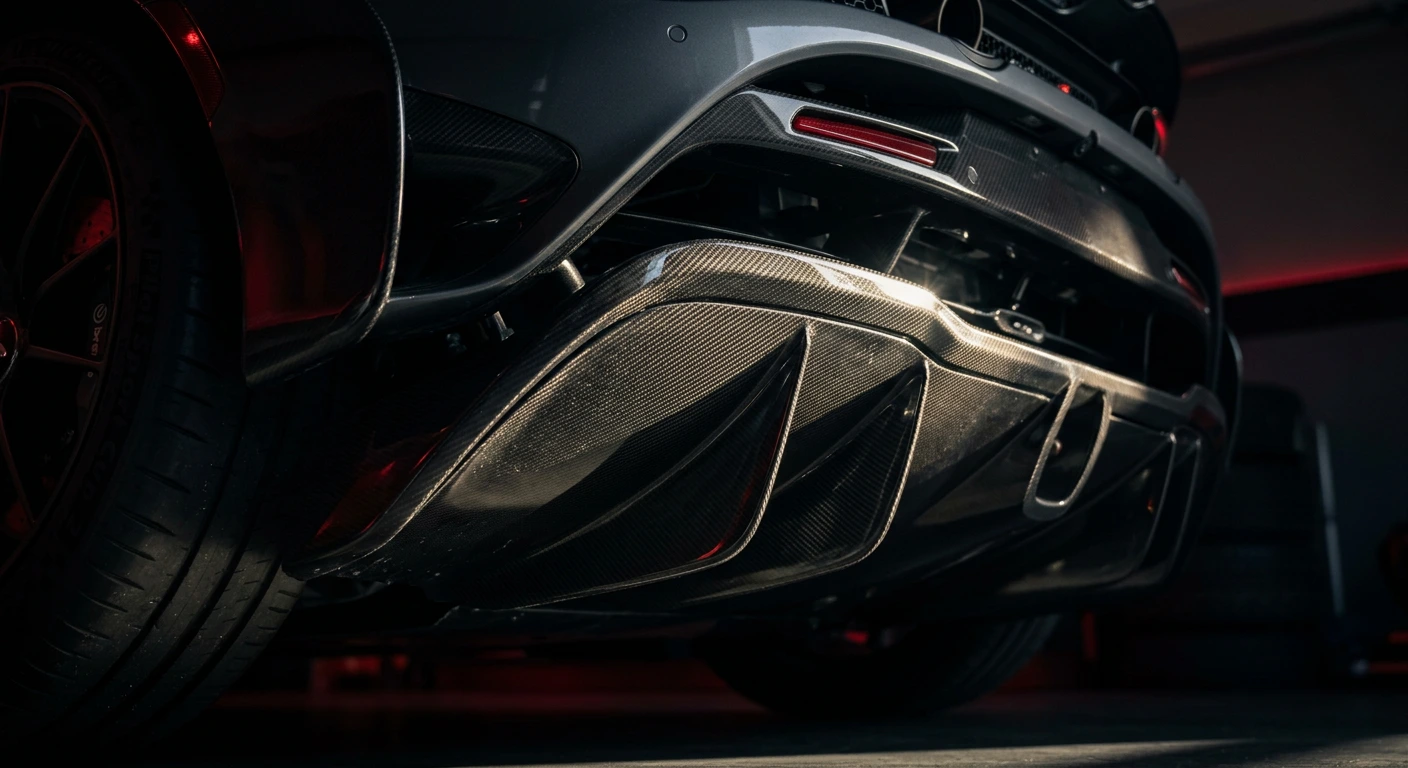
Most carbon fibre damage happens through poor maintenance habits rather than through dramatic impact. Using strong chemicals, washing dirty surfaces with dry cloths, applying the wrong compounds, or exposing the finish to prolonged neglect all reduce the quality of the part over time.
Using aggressive chemicals
Strong cleaners can weaken surface protection and dull the finish.
Dry wiping dust or grit
This creates fine scratches and quickly reduces gloss clarity.
Ignoring UV exposure
Long-term sun exposure without protection can reduce finish stability.
Over-polishing
Correction should be controlled. Too much polishing can compromise the top finish layer.
How Often Should You Maintain Carbon Fibre Parts?
There is no single schedule that fits every build. It depends on usage, storage conditions, climate, and how exposed the part is to everyday contamination. Exterior components like splitters, side skirts, diffusers, and spoilers generally require more regular inspection than interior trims or less exposed surfaces.
As a rule, light regular maintenance is far better than occasional heavy correction. Frequent gentle care preserves the finish more effectively than waiting until deterioration becomes visible.
Protecting Carbon Fibre Is Part of Premium Ownership
Carbon fibre should never look neglected. Its purpose within a build is to sharpen presence, reduce visual weight, and contribute to a more serious product direction. That only works when the finish stays resolved, disciplined, and properly maintained.
The strongest builds are not defined only by the parts chosen, but by how those parts are looked after over time.
Frequently Asked Questions
Can carbon fibre fade over time?
Yes. Without proper UV protection and maintenance, the finish can gradually lose clarity and consistency.
Can you polish carbon fibre?
Yes, but carefully. Any polishing should be controlled and suitable for the coated surface system used on the part.
How long does carbon fibre last?
When manufactured correctly and maintained properly, carbon fibre components can retain strong long-term performance and visual quality for many years.
What is the best way to protect carbon fibre?
Routine gentle cleaning, UV-conscious care, and specialist surface protection are the best long-term strategies.
Explore the ASM Carbon Programme
Discover platform-focused carbon fibre components developed for stronger fitment logic, cleaner surface standards, and a more resolved ownership experience.