

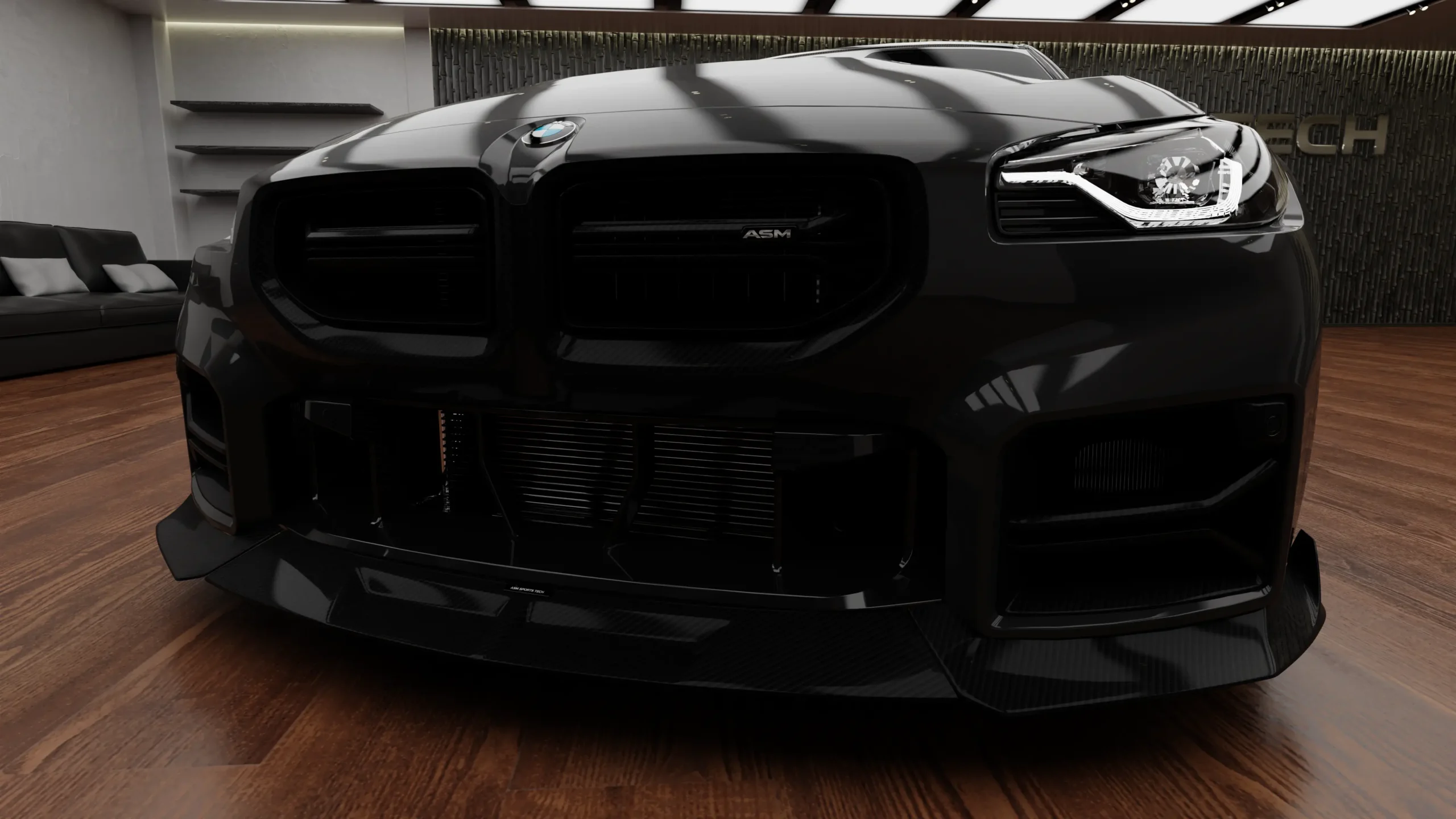
The material behind an aero part decides more than its appearance. It affects weight, rigidity, fitment discipline, long-term durability and the way the component behaves under real airflow load.
Material choice is where the quality of a build begins.
When a client looks at a splitter, diffuser, spoiler or side skirt online, the shape is usually the first thing they notice. But once the part is installed, the material becomes more important than the photograph.
A carbon fibre aero component, a fibreglass body kit and an ABS plastic styling part may all create visual change, but they do not deliver the same performance feel, fitment quality or long-term presence. The difference becomes clear through weight, rigidity, surface finish, heat resistance and how stable the part remains once the car is being used at speed.
This guide compares carbon fibre, fibreglass and ABS from an engineering-led perspective, so you can understand which material is most suitable for a serious performance build, an OEM+ road car or a lower-cost styling upgrade.
The best material is the one that keeps its shape, keeps its fitment and supports the vehicle direction after installation — not only the one that looks good in a product image.
Three materials. Three different levels of performance intent.
Lightweight, rigid and performance-focused
Carbon fibre offers the strongest performance identity of the three. It is lightweight, stiff and visually technical, making it ideal for high-end aero components where structure and finish both matter.
Dry pre-preg carbon fibre sits at the highest level because the resin content, weave direction and curing process are controlled more precisely.
Flexible for shaping, weaker in refinement
Fibreglass is common in lower-cost body kits because it is easier to mould and repair. It can create dramatic shapes, but quality varies heavily depending on the manufacturer.
It is usually heavier than carbon fibre and can crack, distort or require more bodyshop correction if the moulding quality is poor.
Practical, affordable and mass-production led
ABS is widely used in OEM plastic parts because it is cost-efficient, repeatable and impact resistant. For entry-level styling parts, it can be a practical option.
However, ABS does not provide the same material prestige, stiffness or lightweight performance associated with real carbon fibre aero.
Choose the build intent and see which material makes sense.
A material should be selected around the purpose of the vehicle. A daily styling part, a budget kit and a platform-focused performance programme do not require the same construction standard.
Choose carbon fibre when the car needs to feel engineered, not simply modified.
Carbon fibre is the correct choice when the component needs lightweight construction, high rigidity, visible material quality and a refined OEM+ finish. For splitters, diffusers, spoilers and full aero programmes, it supports a more complete performance identity.
This is the direction ASM Sports Tech prioritises for serious platform-focused development.
Explore ASM Aero ProgrammesChoose fibreglass when cost and shape matter more than refinement.
Fibreglass can work for budget custom body kits or heavily modified show builds. It is useful when the part will be painted and the priority is visual transformation rather than lightweight material performance.
The compromise is consistency. Fitment, cracking resistance and surface finish depend heavily on the mould and production quality.
Choose ABS for simple styling parts and lower-risk daily use.
ABS is a practical material for mass-produced trims, small styling parts and components where lower replacement cost matters. It can be useful for entry-level upgrades, but it does not carry the same performance or material presence as carbon fibre.
For a luxury performance build, ABS usually feels more functional than aspirational.
Carbon fibre vs fibreglass vs ABS: real-world material comparison.
| Factor | Carbon Fibre | Fibreglass | ABS Plastic |
|---|---|---|---|
| Weight | Very lightweight with excellent strength-to-weight performance. | Usually heavier than carbon fibre, especially in thicker moulded parts. | Moderate weight depending on thickness and moulding. |
| Rigidity | High rigidity, especially with dry pre-preg construction. | Moderate rigidity; can flex or crack depending on quality. | Flexible and impact resistant, but not structurally performance-led. |
| Fitment quality | High OEM+ fitment potential when moulding is precise. | Can require bodyshop adjustment, sanding or correction. | Usually consistent in mass production, but less premium in finish. |
| Visual finish | Visible weave, gloss or satin carbon finish, strong technical identity. | Usually requires paint finishing to look complete. | Plastic finish, often textured or painted. |
| Heat resistance | Strong heat resistance depending on resin and construction. | Moderate; resin quality affects stability. | Can deform near higher heat zones if unsuitable. |
| Long-term quality | Excellent when maintained correctly and manufactured properly. | Variable; cheaper parts may crack or distort. | Practical but less special over time. |
| Best use | Performance aero, carbon fibre body kits, OEM+ builds and luxury tuning programmes. | Budget custom body kits and paint-finished show builds. | Entry-level styling trims and mass-produced OEM plastic components. |
Dry carbon fibre remains the benchmark when performance and finish both matter.
The reason carbon fibre is used across motorsport, high-performance road cars and aerospace-inspired applications is simple: it offers high stiffness with low weight. In aerodynamic components, this matters because the part is constantly exposed to airflow pressure and vibration.
A front splitter that flexes too much can reduce aerodynamic consistency. A diffuser that is poorly moulded can interrupt airflow. A spoiler with weak structural stability may look right but fail to deliver the intended sense of rear-end confidence.
Dry carbon fibre allows a more controlled construction process. The result is a lighter, sharper and more technically refined component, especially when the part is designed around a specific platform rather than made as a universal styling piece.
The goal is not only to add carbon. The goal is to create aerodynamic components that feel integrated into the platform — visually, structurally and emotionally.
Open G87 M2 Programme StudioWhich material should you choose?
You want the build to feel complete.
Carbon fibre is the strongest choice for clients who want a refined performance car, strong visual identity, lightweight construction and long-term fitment confidence.
You want a lower-cost custom shape.
Fibreglass can make sense for painted body kits where cost matters more than material prestige, weight saving or high-end finish.
You want simple styling practicality.
ABS can be useful for smaller styling parts or lower-cost daily upgrades, but it does not create the same engineered performance feel as carbon fibre.
From material choice to complete vehicle direction.
If this comparison helped you understand the importance of material quality, the next step is choosing how that material integrates with the full vehicle. ASM Sports Tech develops aerodynamic programmes around fitment discipline, visual proportion and platform-focused development.
View the full ASM direction across aerodynamics, forged wheels and performance components.
Interactive experience Open the G87 M2 Programme StudioConfigure aero components, wheels, colour and performance direction in real time.
Client enquiry Speak With ASMDiscuss the correct carbon fibre direction for your platform before ordering.
Carbon fibre vs fibreglass vs ABS questions.
Is carbon fibre better than fibreglass?
For performance aero parts, yes. Carbon fibre is generally lighter, stiffer and more technically refined than fibreglass. Fibreglass can still work for lower-cost painted body kits, but it does not offer the same strength-to-weight performance or material presence.
Is ABS plastic good for car body kits?
ABS can be practical for entry-level styling parts because it is impact resistant and suitable for mass production. However, it is not the best choice when the goal is lightweight construction, visible material quality or high-end performance aero.
Why is dry carbon fibre more expensive?
Dry carbon fibre uses a more controlled manufacturing process with pre-preg material and precise curing. This reduces excess resin, improves rigidity and creates a lighter, more refined component compared with basic wet lay carbon or fibreglass.
Does carbon fibre improve performance?
Carbon fibre can improve performance when used correctly because it reduces weight and increases structural stiffness. In aero parts, rigidity matters because the component needs to remain stable under airflow load.
Which material is best for a front splitter?
For a serious performance splitter, carbon fibre is usually the best material because it offers low weight and high rigidity. ABS may be practical for lower-cost styling, while fibreglass can work for painted custom applications.
Which material is best for an OEM+ build?
Carbon fibre is the best choice for an OEM+ performance build because it combines refined visual integration with lightweight construction and high-end material quality.
Material quality changes how the entire car feels after installation.
Explore ASM Sports Tech aerodynamic programmes developed around dry carbon fibre construction, OEM+ fitment discipline and complete-build integration.