

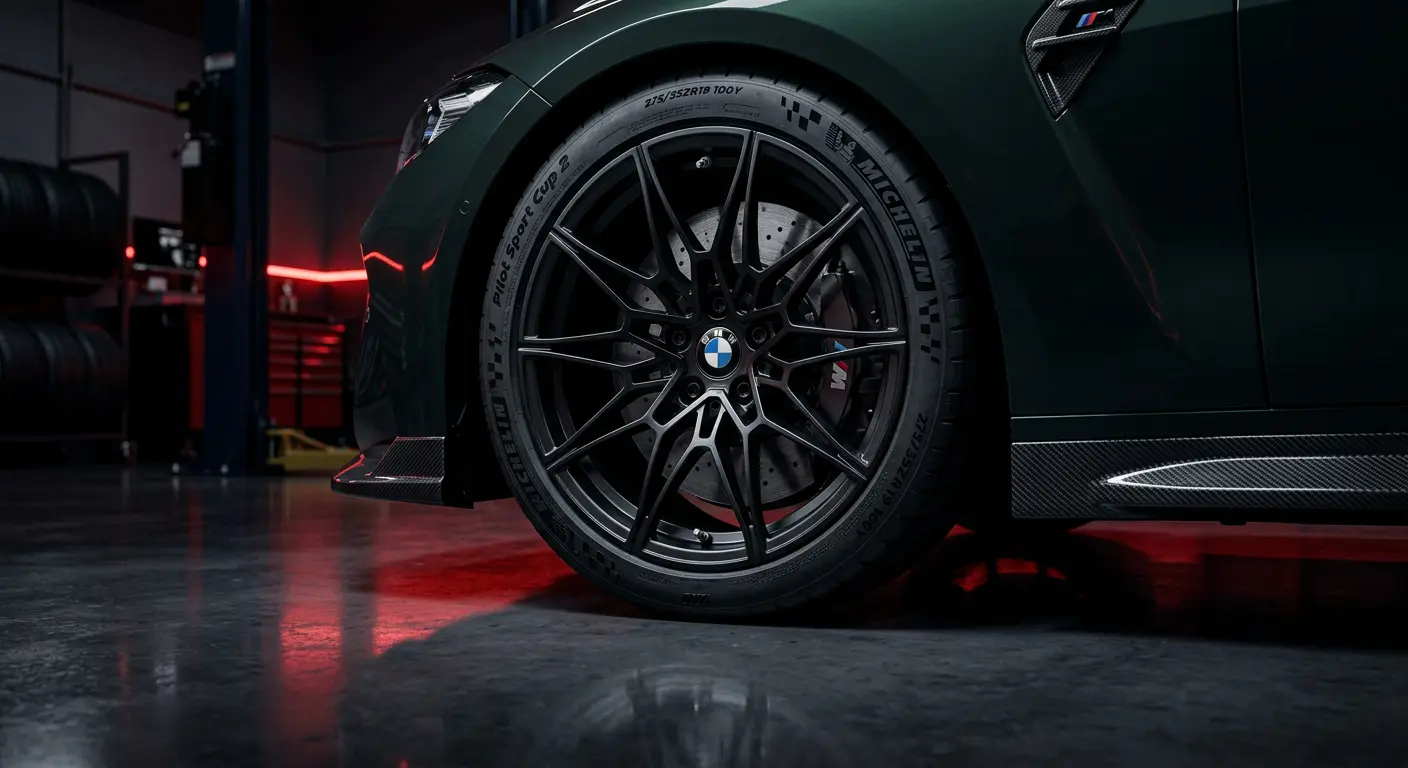
Tyres are one of the most important performance upgrades on any car. Power, suspension, aero and forged wheels only work properly when the tyre setup can translate them into grip, control and confidence. This guide explains what makes a strong performance tyre, how to choose the right type for your build, and why tyre choice should always be matched with wheel fitment and platform direction.
Why Tyres Matter More Than Most Modifications
A performance car is only as good as the contact patch connecting it to the road. The tyres control acceleration grip, braking performance, steering response, wet-weather confidence, cornering behaviour and how stable the car feels at speed. Even a high-powered build can feel average if the tyres are not suited to the platform.
For drivers building a road-focused performance car, tyre choice should never be treated separately from wheel choice. Width, offset, sidewall profile, compound, load rating and wheel weight all work together. This is why performance tyres and forged wheels are part of the same conversation: one creates the grip, the other controls the platform that supports it.
The best tyre is not always the most aggressive one. It is the one that matches the car, the wheel setup, the road conditions and the way the vehicle is actually driven.
Choose The Right Tyre Strategy For Your Build
Different builds need different tyre behaviour. Select the driving style below to see which tyre direction makes the most sense.
Daily Performance Tyre Setup
For daily use, the best tyre is usually a premium high-performance road tyre with strong wet grip, low noise, good comfort and predictable steering feel.
- Best for refined road builds
- Strong wet and cold-weather usability
- Ideal with lightweight forged wheels
9 Things That Make A Tyre Good For Performance
Rather than naming random tyre models, this guide explains the performance factors that actually matter when choosing tyres for a tuned road car.
Grip Level
Grip is the foundation of every performance tyre. A good tyre needs enough mechanical grip to support acceleration, braking and cornering without feeling unstable or unpredictable.
Steering Response
Performance tyres should make the front end feel sharper and more connected. Sidewall stiffness, compound and tyre construction all influence steering feel.
Wet Weather Control
For UK and European road use, wet grip is essential. The most aggressive dry tyre is not always the smartest road tyre if it becomes nervous in rain.
Heat Range
Track-focused tyres need heat to work properly. Road tyres need to perform from cold. Choosing the wrong heat range can make the car feel worse, not better.
Sidewall Behaviour
The sidewall affects comfort, steering response and how the car loads up through corners. It also changes how the tyre sits on a forged wheel setup.
Tyre Width
Wider tyres can increase grip, but only when wheel width, offset and suspension clearance are correct. More width is not always automatically better.
Load Rating
Powerful SUVs, performance saloons and heavy GT cars need tyres with correct load capacity. This is especially important for BMW M, AMG and Porsche platforms.
Noise And Comfort
For road-focused builds, refinement matters. A tyre that drones, tramlines or feels harsh can make an otherwise premium car feel unfinished.
Wheel Compatibility
Tyres perform best when matched to the correct wheel width, diameter and offset. This is where forged wheel specification becomes part of real performance setup.
Why Tyres And Wheels Should Be Chosen Together
A performance tyre cannot work properly if the wheel setup is wrong. Wheel weight, width, offset and construction affect how the tyre behaves under load.
Correct width supports the tyre sidewall and improves response.
Forged wheels can reduce weight compared with heavier cast wheels.
Offset and clearance decide whether tyre upgrades work properly.
The right tyre and wheel combination improves both performance and appearance.
Road Tyres vs Performance Tyres
What Are The Best Tyres For Performance Cars?
The best tyres for performance cars depend on the platform and driving environment. A BMW M car used daily in the UK needs a different tyre strategy from a lightweight track car, a high-powered AMG, or a Porsche driven hard in dry summer conditions. This is why simply searching for the “grippiest tyre” can be misleading.
For a fast road build, the strongest choice is usually a premium ultra-high-performance tyre. This gives strong dry grip, safe wet-weather control, good braking confidence and enough comfort for daily use. For a track-focused build, a semi-slick or track-biased tyre may offer more grip, but it often requires heat, better alignment and more careful use in bad weather.
Tyres also need to match the wheel setup. A forged wheel programme allows better control over width, offset and weight. This can improve the way the tyre sits, responds and works with the suspension. When tyre and wheel choice are planned together, the car feels more deliberate, more stable and more complete.
This is where ASM Sports Tech approaches the topic differently. We do not treat tyres as isolated consumables. We view them as part of a complete platform setup involving forged wheels, suspension, aero direction and vehicle use case.
The correct tyre does not just add grip. It completes the connection between the car, the wheel and the road.
Performance Tyre Questions, Answered
These are the most common questions people ask before choosing tyres for a performance car.
What are the best tyres for performance cars?
The best tyres depend on how the car is used. For daily and fast road use, a premium ultra-high-performance tyre is usually the best balance of grip, wet control and refinement.
Are wider tyres always better?
No. Wider tyres only work properly when wheel width, offset, suspension clearance and alignment are correct. Incorrect width can make the car worse to drive.
Do performance tyres improve handling?
Yes. A good performance tyre can improve steering response, braking, cornering grip and overall confidence, especially when paired with the right wheel setup.
Do forged wheels improve tyre performance?
Forged wheels can help by reducing unsprung mass and allowing better fitment control. This supports tyre behaviour and vehicle response.
Should I choose road tyres or track tyres?
For daily use, road-biased performance tyres are usually better. Track tyres make more sense when the car is used in high-temperature, high-load driving conditions.
What tyre setup suits a tuned car?
A tuned car needs tyres that match its power, weight, suspension, wheel fitment and driving use. The setup should be planned as part of the complete build.
Build The Wheel And Tyre Direction Properly
Tyres create the grip. Wheels control the platform that supports it. Explore ASM forged wheel direction for performance builds that need stronger fitment, lower weight and a more complete stance.