




Modern performance cars are more advanced than ever before. From lightweight materials to aerodynamic body components, many of the technologies that define today’s high-performance vehicles originate directly from motorsport.
Racing has always served as a proving ground for automotive innovation. Technologies that are pushed to their limits on the track often evolve into solutions that improve road-car performance, efficiency, and driving dynamics.
Today, everything from carbon fibre body components to aerodynamic enhancements used on high-performance road vehicles can trace its origins back to the relentless pursuit of speed on the racetrack.
For brands focused on precision engineering and performance upgrades, motorsport continues to provide the blueprint for developing the next generation of performance components.

Key Takeaways
-
Motorsport is the primary source of innovation for modern performance cars.
-
Technologies such as carbon fibre, advanced aerodynamics, and lightweight engineering originated in racing.
-
Aerodynamic components like splitters, diffusers, and spoilers improve vehicle stability and downforce.
-
Lightweight materials increase acceleration, braking performance, and cornering capability.
-
Many high-performance road cars now integrate motorsport engineering principles.
Motorsport: The Ultimate Testing Environment
Motorsport represents one of the most demanding environments for automotive engineering. Vehicles must perform under extreme stress, high speeds, and intense aerodynamic forces while maintaining reliability.
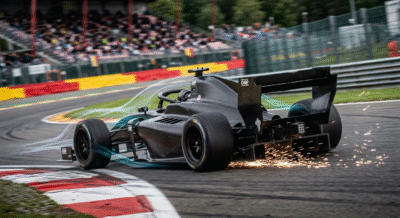
In racing series such as Formula 1, World Endurance Championship, and DTM, engineers constantly develop new technologies to gain even the smallest competitive advantage.
Many of these developments later find their way into production vehicles and aftermarket performance upgrades.
Examples include:
-
Carbon fibre body structures
-
Advanced aerodynamics
-
Lightweight material engineering
-
Performance braking systems
-
Active aerodynamic components
What begins as a solution designed to shave milliseconds off a lap time can eventually transform the driving experience of road cars worldwide.
Carbon Fibre: Motorsport’s Greatest Innovation
One of the most significant technologies transferred from motorsport to road cars is carbon fibre.
Originally developed for aerospace applications, carbon fibre became widely used in motorsport because of its exceptional strength-to-weight ratio. Racing engineers quickly realized that replacing traditional materials with carbon fibre could dramatically reduce vehicle weight while increasing structural rigidity.

This innovation first became prominent in Formula 1 in the early 1980s when carbon fibre monocoque chassis designs began replacing aluminum structures.
Today, carbon fibre is a defining feature of modern performance vehicles from manufacturers such as Ferrari, McLaren, and Lamborghini.
Beyond structural components, carbon fibre is now widely used for:
-
Front splitters
-
Rear diffusers
-
Spoilers and wings
-
Side skirts
-
Interior performance components
These parts are not simply aesthetic upgrades. They provide measurable improvements in both vehicle weight and aerodynamic performance.
Aerodynamics: Where Racing Meets Engineering
Aerodynamics plays a crucial role in motorsport performance. At high speeds, air resistance and downforce determine how efficiently a vehicle moves through the air and how much grip it maintains on the road.

Racing teams invest enormous resources into aerodynamic development, using tools such as computational fluid dynamics (CFD) and wind tunnel testing.
These technologies have now become central to the development of high-performance road-car components.
Aerodynamic components such as:
-
Front splitters
-
Rear diffusers
-
Rear spoilers
-
Side skirts
-
Canards and air ducts
are all designed to manage airflow around the vehicle.
When engineered correctly, these components can:
-
Increase downforce
-
Improve high-speed stability
-
Reduce aerodynamic drag
-
Enhance cooling airflow
This is why many modern performance vehicles now incorporate aggressive aerodynamic elements inspired directly by motorsport design principles.
Lightweight Engineering: The Key to Performance
In motorsport, weight reduction is one of the most effective ways to improve performance.
Reducing vehicle mass enhances:
-
acceleration
-
braking performance
-
cornering capability
-
overall efficiency
This philosophy has become central to the design of modern performance vehicles.

Manufacturers such as Porsche, BMW, and Mercedes-Benz have increasingly incorporated lightweight materials into their high-performance models.
Aftermarket performance components follow the same principle.
Replacing heavier OEM parts with lightweight carbon fibre components can significantly reduce overall vehicle weight while maintaining structural strength.
Even small reductions in weight can improve a car’s responsiveness and agility, making the driving experience more engaging.
Cooling and Airflow Management
Motorsport vehicles must operate under extreme conditions where temperatures can quickly become a limiting factor.
Managing airflow effectively allows engineers to control temperatures for:
-
engines
-
brakes
-
intercoolers
-
transmissions
Racing vehicles therefore feature carefully designed air ducts and vents that guide airflow to critical components.
Many modern road cars now incorporate similar features, including:
-
functional hood vents
-
bumper air ducts
-
brake cooling channels
-
aerodynamic intake systems
These designs not only improve cooling performance but also contribute to overall aerodynamic efficiency.
Motorsport Influence on Modern Performance Cars
The influence of motorsport technology can be seen clearly in today’s most advanced performance vehicles.

Cars such as the BMW M4 G82, Porsche 911 GT3, and Mercedes-AMG GT Black Series incorporate numerous motorsport-derived technologies.
These include:
-
carbon fibre structural components
-
advanced aerodynamic bodywork
-
lightweight chassis engineering
-
track-focused suspension systems
The line between road cars and race cars has never been closer.
The Role of Aftermarket Engineering
While many performance vehicles leave the factory with impressive engineering, aftermarket performance upgrades allow enthusiasts to further enhance their vehicles.

High-quality carbon fibre components inspired by motorsport design can improve both the appearance and performance of modern performance cars.
Well-engineered aerodynamic upgrades can:
-
increase stability at high speed
-
improve airflow efficiency
-
reduce lift
-
enhance vehicle balance
When properly developed, these upgrades follow the same engineering principles used in professional motorsport.
Why Motorsport Innovation Continues to Shape the Future
Motorsport will always remain a catalyst for automotive innovation.
As racing technology continues to evolve, new materials, aerodynamic concepts, and performance solutions will inevitably influence the next generation of road vehicles.
Developments such as:
-
active aerodynamics
-
advanced composites
-
lightweight hybrid systems
-
next-generation performance materials
are already beginning to reshape what performance cars can achieve.
For performance enthusiasts, this means the technology once reserved for racing machines is becoming increasingly accessible on the road.
Conclusion
Motorsport has always been more than just competition. It is an environment where engineering innovation is pushed to its limits in the pursuit of speed and performance.
The technologies developed on the racetrack continue to shape the vehicles we drive today.
From carbon fibre construction to advanced aerodynamics, the influence of motorsport engineering is visible in nearly every aspect of modern performance vehicles.
As performance technology continues to evolve, the connection between racing innovation and road-car performance will only grow stronger.
For drivers who value precision engineering and advanced materials, motorsport remains the ultimate source of inspiration.
Frequently Asked Questions
Do motorsport technologies really improve road cars?
Yes. Many modern performance technologies originate from racing. Lightweight materials, advanced aerodynamics, and performance braking systems were first developed in motorsport before being adopted by road-car manufacturers.
Why is carbon fibre used in motorsport?
Carbon fibre offers an extremely high strength-to-weight ratio. It allows engineers to reduce vehicle weight while maintaining structural strength, which significantly improves performance and efficiency.
Do aerodynamic upgrades improve performance?
When properly engineered, aerodynamic upgrades such as front splitters, rear diffusers, and spoilers can increase downforce and improve vehicle stability at high speeds.
Why are lightweight materials important for performance cars?
Reducing weight improves acceleration, braking, and cornering performance. Lightweight engineering has become one of the most important design principles in both motorsport and modern high-performance road vehicles.