



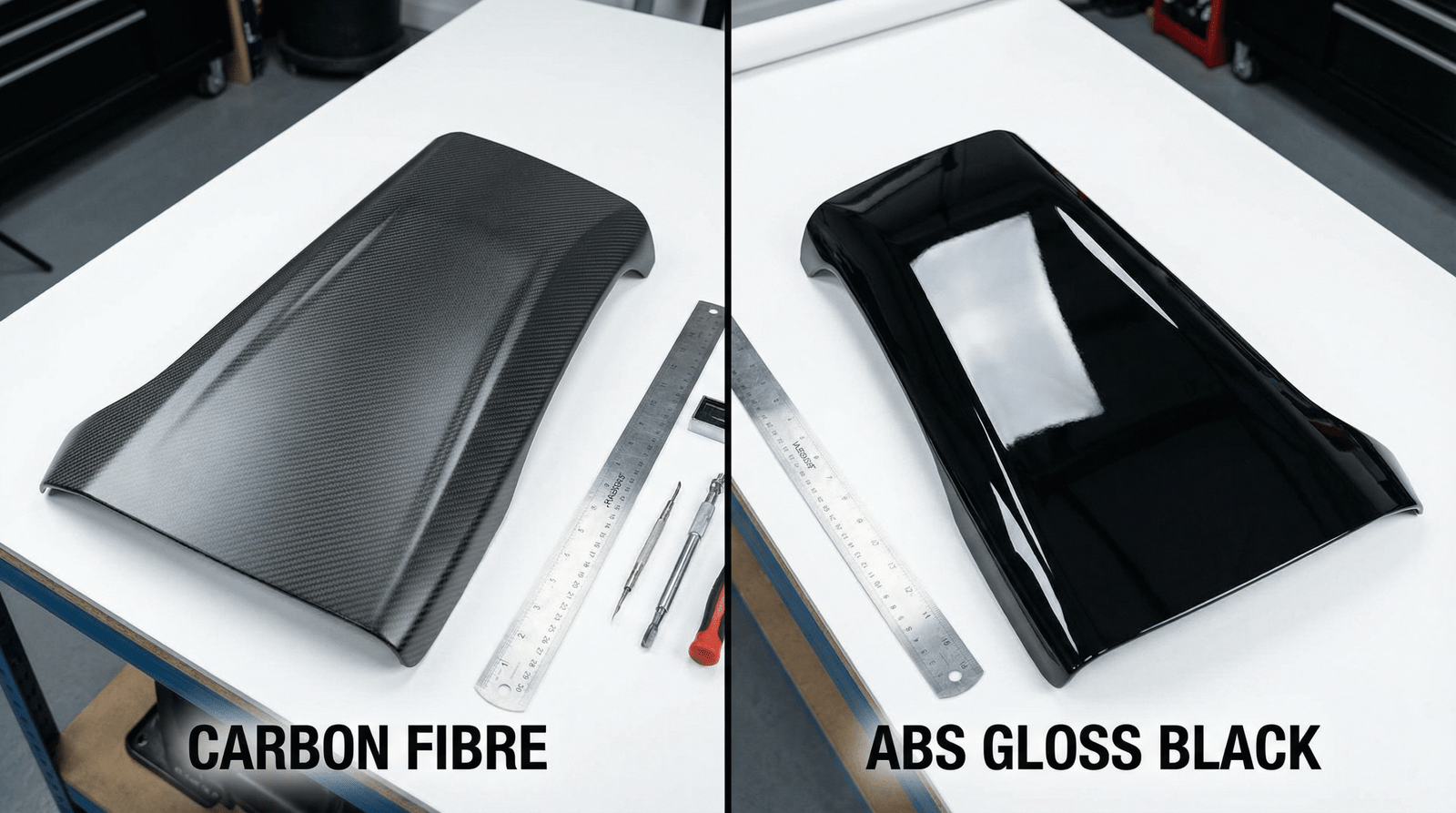
Carbon Fibre vs ABS Aero Parts: What Actually Matters?
When choosing aerodynamic upgrades, the biggest difference is not always what you see in a product photo. Material quality affects fitment, rigidity, finish, weight, long-term durability, and the overall standard of the finished build.
In the premium automotive aftermarket, the words carbon fibre and ABS are often mentioned in the same conversation, but they do not deliver the same experience. To many buyers, both may appear to achieve a similar visual result at first glance: a sharper splitter, a more aggressive diffuser, a cleaner spoiler line, or a stronger road presence. Yet once these parts are installed, the difference becomes far more obvious.
Material choice affects far more than appearance. It influences how a part feels in the hand, how precisely it follows factory body lines, how it performs under heat and stress, how premium the finish looks in daylight, and how the overall car is perceived once the build is complete. For drivers who care about proper fitment, long-term quality, and an OEM+ result rather than a generic aftermarket look, the material behind the part matters just as much as the design itself.
This guide breaks down the real-world difference between carbon fibre and ABS aero parts, explains where each material fits in the market, and outlines what buyers should actually focus on before upgrading their car. If you are building a BMW, Audi, Porsche, Mercedes, or any premium platform and want your upgrades to look engineered rather than simply added on, this is the comparison that matters.
Carbon Fibre vs ABS Aero Parts – Quick Comparison
Before diving deeper into materials, here is a simple comparison showing the key differences between carbon fibre and ABS when used in automotive aerodynamic components such as front splitters, diffusers, side skirts, and spoilers.
| Feature | Carbon Fibre | ABS Plastic |
|---|---|---|
| Weight | Very lightweight | Heavier than carbon fibre |
| Rigidity | High structural stiffness | More flexible |
| Visual Quality | Premium woven finish | Painted plastic appearance |
| Durability | High resistance when properly manufactured | Can deform under stress or heat |
| Prestige | Motorsport-inspired material | Entry-level aftermarket material |
| Typical Use | Premium aero programmes and performance builds | Budget styling upgrades |
Why Material Choice Matters in Premium Aero Design
Many buyers start with styling, and that makes sense. A front splitter changes the attitude of the car immediately. A rear spoiler can sharpen the profile of the boot line. Side skirt extensions make the car sit lower visually and complete the side view. A rear diffuser can transform the back of the vehicle from understated to motorsport-inspired. But while design gets attention first, material quality decides whether the final result feels premium or compromised.
In high-end automotive styling, material selection affects five critical areas: rigidity, weight, finish quality, fitment confidence, and long-term durability. These are not secondary details. They influence whether the part complements the factory design language properly, whether the edges stay clean and precise, whether the surface still looks correct after months of use, and whether the car feels elevated rather than over-modified.
This is exactly why serious builds tend to move away from purely price-led decisions. Once you are working with premium platforms, the standard of the part becomes part of the standard of the car. A poorly chosen material may save money at the beginning, but it can reduce the perceived quality of the full build once installed.
Technical Insight
A quality aero component should do more than add visual aggression. It should follow the car’s original lines naturally, maintain sharp surface definition, and create a result that feels intentional from every angle. Material plays a direct role in how successfully that happens.
What Carbon Fibre Actually Brings to a Build
Carbon fibre is widely associated with premium performance builds for good reason. It combines low weight with high rigidity, while also delivering a technical woven finish that instantly communicates a higher level of craftsmanship. In the context of aero parts, this makes carbon fibre especially attractive for front splitters, side skirts, rear diffusers, spoilers, mirror caps, bonnet vents, and other components where both appearance and structural definition matter.
One of the most important qualities of carbon fibre is stiffness. A well-manufactured carbon part tends to hold its shape with more confidence, which is particularly valuable on sharp-edged components where clean lines are part of the design. This helps the part feel more purposeful once mounted to the vehicle, especially on platforms where the bodywork itself is already very sculpted.
Carbon fibre also carries a strong visual and emotional value. It has become a recognised symbol of performance engineering, motorsport influence, and top-tier aftermarket styling. For owners creating a premium street or show build, this matters. The material itself contributes to the overall feel of exclusivity.
- Lightweight construction that supports a more performance-led character
- High rigidity that helps maintain crisp edges and sharper design definition
- Distinctive woven finish with a premium, technical look
- Stronger association with high-end, motorsport-inspired builds
- Better suited to customers seeking a more exclusive finished result
On premium vehicles, carbon fibre does not just add a part. It adds presence. That is why owners of cars such as the BMW M4 G82, Audi RS3 8V, Porsche 992, BMW G87 M2, and Mercedes AMG platforms often prioritise carbon for the most visible exterior upgrades. The objective is not simply to make the car look more aggressive, but to make it feel more complete.
Where ABS Fits in the Market
ABS plastic remains popular in the aftermarket because it is more accessible from a price perspective and can still serve a practical purpose for many buyers. It is often chosen for styling-oriented upgrades where budget is the main priority, or where the buyer simply wants to change the look of the vehicle without stepping into premium material costs.
That does not mean ABS has no place. For some use cases, particularly entry-level cosmetic upgrades, it can offer a route into exterior modification at a lower cost. It can also be suitable for drivers who are experimenting with the look of a car before committing to a higher-end programme later on.
However, ABS does not usually deliver the same overall experience as real carbon fibre. It lacks the same prestige, the same visual richness, and in many cases the same structural feel. On some builds, especially on premium cars, that difference becomes very noticeable. The part may technically do the job of changing the silhouette, but it may not elevate the car in the same way.
This is where many buyers make the wrong comparison. They compare shape to shape, rather than standard to standard. Two parts may look similar online, but once mounted to the car the difference in material, edge quality, finish, and presence can change the entire outcome.
Carbon Fibre vs ABS: The Real-World Differences
The most useful way to compare carbon fibre and ABS is not in theory, but in how they behave once they become part of the vehicle. In real ownership, the differences usually show up in finish, confidence, and overall build quality.
Carbon Fibre
Delivers a more premium finish, stronger visual depth, lighter construction, and a more technical feel. It is usually preferred for builds where exclusivity, sharper detail, and long-term presence matter.
ABS
More budget-focused and practical for lower-cost styling changes, but generally less prestigious in finish and less impressive in overall presence once the vehicle is fully built.
On a car that is already premium, material mismatch becomes more obvious. A high-end platform paired with lower-standard add-ons can quickly create the kind of look enthusiasts often describe as aftermarket rather than engineered. By contrast, quality carbon components tend to blend into the vehicle’s overall identity more naturally, especially when the design follows an OEM+ approach.
Fitment Quality Matters Just as Much as Material
It is important to be precise here: material alone does not guarantee quality. A carbon fibre part can still disappoint if the design is poor, the moulding is inaccurate, or the product was developed without proper attention to the vehicle platform. In the same way, a more affordable material can still look acceptable if the fitment and design logic are well considered.
That said, premium carbon programmes are usually expected to meet a higher standard overall. Buyers do not choose carbon purely for the weave; they choose it because they expect a more complete product. That means better alignment, cleaner transitions, stronger visual integration, and a result that feels closer to factory-level intent.
This is where OEM+ fitment philosophy becomes so important. The strongest aero parts are not the ones shouting for attention from every angle. They are the ones that follow the factory body lines so naturally that the car feels like it should always have looked that way. When the material is right and the fitment is right, the product stops feeling like an accessory and starts feeling like part of the car.
Premium aero is not only about aggression. It is about precision, proportion, and how naturally the component belongs on the platform.
Why Premium Builds Usually Lean Toward Carbon Fibre
Enthusiasts investing in premium exterior programmes are typically not just buying parts. They are shaping the identity of the car. That identity is influenced by the quality of every visible detail, from the weave and finish of the components to how tightly the lines follow the bumper, the side profile, or the boot edge.
Carbon fibre supports this goal because it aligns with the values most premium buyers care about: exclusivity, technical quality, lightweight construction, and a more engineered feel. Even when performance gain is not the sole purpose, the material still contributes to the perception of performance, which matters greatly in the high-end tuning market.
For example, a BMW M4 G82 with a properly designed carbon front splitter, matching side skirts, carbon rear diffuser, and a subtle carbon boot spoiler tends to look cleaner and more resolved than the same car wearing lower-standard materials. The effect is not just visual aggression. It is confidence. The same applies to vehicles such as the Audi RS3 saloon, Porsche Cayenne Coupe, Porsche 992 Carrera, or the latest G8X and G87 BMW platforms.
Buyers building these cars are usually not trying to imitate a cheaper market segment. They are trying to raise the car toward a more exclusive level. Carbon fibre helps communicate that instantly.
Common Mistakes Buyers Make When Comparing Aero Parts
One of the most common mistakes is comparing products only by image or silhouette. A part photographed from the right angle can look impressive regardless of its real-world quality. What the image does not show is how the part feels in the hand, how the edges are finished, how well it aligns to the platform, or how refined the surface appears up close.
Another mistake is treating all carbon fibre as equal. In reality, manufacturing quality, weave consistency, finishing, and overall product development still matter enormously. Carbon fibre is a premium material, but it still needs premium execution.
Buyers also often underestimate the long-term effect of small imperfections. Slight misalignment, an edge that feels too soft, a finish that does not match the quality of the car, or a shape that fails to follow body lines properly can weaken the entire build. On a serious car, those details are not forgotten. They become the difference between a complete-looking programme and a collection of random add-ons.
The better buying question is not simply “Which part is cheaper?” It is “Which part helps the car look better finished, better integrated, and more premium six months from now?”
What Buyers Should Focus On Before Choosing
Before choosing between carbon fibre and ABS, buyers should define the standard they want for the car. If the target is a cleaner, more exclusive, more complete result, then premium material and fitment become much more important. If the goal is purely to add visual styling at the lowest entry cost, ABS may still have a place.
The key questions to ask are:
- Do I want the build to feel premium or simply modified?
- Does the part follow the platform’s original design language properly?
- Will the material match the standard of the rest of the car?
- Am I building for short-term appearance or long-term satisfaction?
- Would I be proud of the finish quality in person, not just online?
Buyers who answer those questions honestly usually end up understanding why premium platforms deserve premium materials. The right aero part should improve the car without lowering the quality impression of the full vehicle.
OEM+ Design Language
Platform-specific styling should work with the factory lines of the car, not fight against them.
Confidence-First Support
Premium aero should be backed by clear guidance, stronger reassurance, and a higher-standard ownership experience.
Performance-Led Identity
The best exterior programmes deliver more than visual impact. They communicate engineering intent and premium presence.
Explore Premium Carbon Fibre Upgrades
If your goal is to create a more complete, more aggressive, and more exclusive exterior package, platform-specific carbon fibre upgrades can transform the way the car feels as a whole. The strongest results come from selecting parts that match the standard of the vehicle and work together as one design language.
Frequently Asked Questions
Is carbon fibre always better than ABS for aero parts?
Not automatically in every case, but for premium builds carbon fibre is usually the stronger choice because it offers a more exclusive finish, lower weight, greater rigidity, and a more performance-led overall feel. ABS can still suit more budget-focused styling upgrades.
Do carbon fibre parts fit better than ABS parts?
Fitment depends on product development, mould quality, and platform-specific design, not only on material. However, premium carbon programmes are often expected to meet a higher overall standard, which can result in a cleaner and more integrated final look.
Why do enthusiasts prefer carbon fibre on BMW, Audi, and Porsche builds?
Because it aligns with the premium identity of those vehicles. Carbon fibre adds technical depth, stronger visual presence, and a more engineered feel that suits high-end exterior programmes much better than lower-cost alternatives.
Is ABS good enough for daily road cars?
It can be suitable for buyers who want a more affordable styling change and are less concerned with premium finish or exclusivity. The right choice depends on the standard you want for the final build.
Final Thoughts
The difference between carbon fibre and ABS aero parts is not simply about material names. It is about the standard of the finished car. Carbon fibre generally suits buyers who want a more premium, more technical, and more complete result. ABS may still serve a purpose for more accessible styling changes, but it does not usually deliver the same overall presence or perceived quality on a serious build.
For premium platforms, every visible detail contributes to the final impression. When the material, the fitment, and the design logic all work together, the car feels sharper, cleaner, and more intentional. That is what separates a part that merely changes the look from a part that genuinely elevates the vehicle.
In a market filled with options, the strongest builds are rarely created by shortcuts. They are created by deliberate choices, higher standards, and components that respect the identity of the platform they are fitted to.