

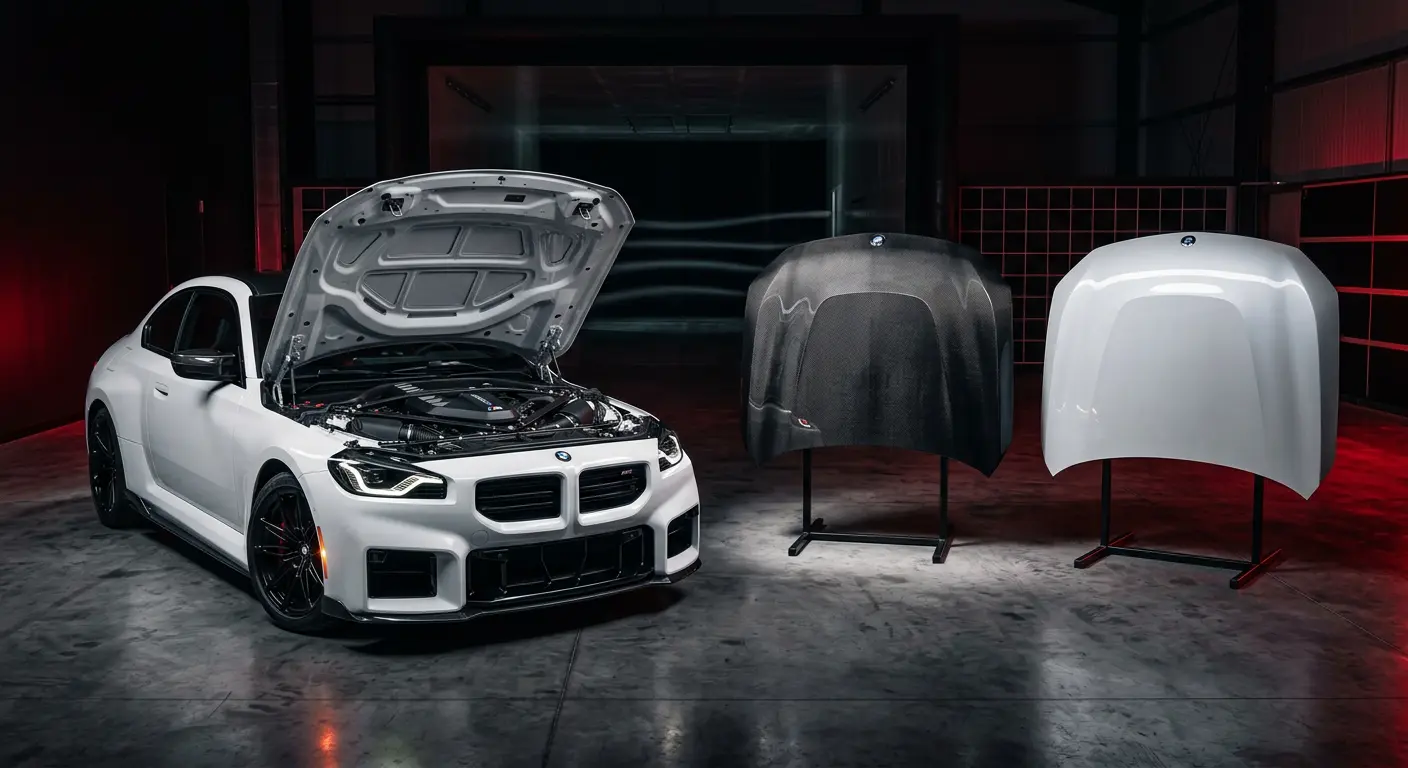
9 Advantages of Carbon Fiber vs Aluminum Hoods
A hood is not just a body panel. On a performance car, it affects front-end mass, heat behaviour, structural feel, visual identity and the way the complete build presents itself. Carbon fiber hoods are often treated as a styling upgrade, but the real advantages go much deeper.
Why Hood Material Changes More Than Appearance
Many owners compare carbon fiber and aluminum hoods only by appearance. That misses the real engineering difference. The hood sits high and forward on the car, so reducing weight in this area can influence the way the front end feels, how the car responds to steering input, and how complete the build feels visually.
Aluminum is already lighter than traditional steel and remains a strong material for OEM manufacturing. But carbon fiber offers a more advanced strength-to-weight direction, especially when the part is produced properly using quality layup, controlled resin content and clean finishing standards.
Carbon fiber is not just a visual upgrade. It is a material decision that changes how the front of the car feels, breathes and presents itself.
See How Front-End Mass Changes
Switch between aluminum and carbon fiber mode to visualise why lightweight bonnet upgrades matter for front-end response and vehicle character.
Carbon fiber reduces front-end mass compared with heavier metal panels.
Less forward weight can support sharper steering feel and front-end behaviour.
Vented carbon bonnet designs can support engine bay heat extraction.
Carbon transforms the visual authority of a performance build.
9 Advantages of Carbon Fiber Hoods
These are the reasons carbon fiber hoods are used across serious performance builds, motorsport-inspired platforms and high-end road cars.
Lower Weight
A carbon fiber hood can reduce weight compared with aluminum, helping remove mass from a high and forward position on the car.
Sharper Front-End Feel
Reducing front-end mass can make the car feel more responsive, especially when paired with wider chassis and aero upgrades.
Better Strength-To-Weight
Carbon fiber offers an excellent strength-to-weight ratio, making it ideal for performance applications where weight and rigidity matter.
Improved Heat Extraction
Vented carbon hoods can support hot-air evacuation from the engine bay, especially on turbocharged or tuned platforms.
Premium Visual Identity
Carbon fiber gives the front of the vehicle a more serious, performance-led appearance without needing excessive styling.
Motorsport Influence
Carbon fiber hoods are linked to motorsport logic because they support lightweight construction and purposeful material use.
Better Build Coherence
When matched with splitters, ducts, side skirts and diffusers, a carbon hood helps the entire build feel more complete.
High-End Material Character
Carbon weave, surface depth and finish quality create a material presence aluminum cannot replicate visually.
Stronger Upgrade Value
For premium builds, a carbon hood can become one of the defining upgrades because it changes both appearance and specification.
Why Vented Carbon Hoods Matter
Performance engines generate heat. A properly designed vented hood can help release hot air from the engine bay and support a more stable performance environment.
Carbon Fiber Hood vs Aluminum Hood
Is A Carbon Fiber Hood Worth It?
A carbon fiber hood is worth it when the build direction supports it. If the only goal is a small visual change, cheaper materials may appear tempting. But for a complete performance build, carbon fiber carries far more value because it affects material quality, front-end weight, heat behaviour and visual cohesion.
This is especially important on cars where the front end already carries significant engine mass. Reducing weight high and forward can help the vehicle feel more responsive and more focused. The change will not turn a road car into a race car by itself, but it contributes to a more serious performance direction.
A carbon hood also becomes more powerful when paired with other carbon fiber aero components. A splitter, side skirts, rear diffuser, spoiler and hood all speak the same material language. Instead of the car looking like it has random upgrades, it begins to look like a complete programme.
The key is quality. Poor carbon fiber can fit badly, fade, distort or feel cheap. High-quality carbon should feel precise, stable, well-finished and intentional.
The best carbon fiber hood is not just lighter. It should make the whole car feel more engineered.
Carbon Hood Questions, Answered
These are the most common questions people ask before choosing between carbon fiber and aluminum hoods.
Is carbon fiber lighter than aluminum?
In most performance applications, carbon fiber can be lighter than aluminum while still offering excellent strength-to-weight characteristics, especially when produced using high-quality construction methods.
Does a carbon fiber hood improve performance?
It can contribute to performance by reducing front-end mass, supporting sharper response and improving heat extraction when the hood includes functional venting.
Are carbon fiber hoods worth it?
Yes, for performance-focused and premium builds. The value is strongest when the carbon hood is part of a complete lightweight or aero direction.
Do carbon fiber hoods crack?
Low-quality carbon can crack, fade or distort over time. High-quality carbon fiber with proper finishing and installation is far more durable.
Is dry carbon better than wet carbon for hoods?
Dry carbon or pre-preg carbon is usually the more advanced option because it offers better resin control, lower weight, cleaner finish and stronger consistency.
Should a carbon hood match other aero parts?
Yes. Carbon parts look and perform best when they form a coherent programme across the car, including splitter, skirts, diffuser, spoiler and other aero details.
Build A More Complete Carbon Fibre Direction
Explore carbon fibre hoods, splitters, diffusers, side skirts and platform-specific aero programmes developed around fitment, material quality and performance-led design.